
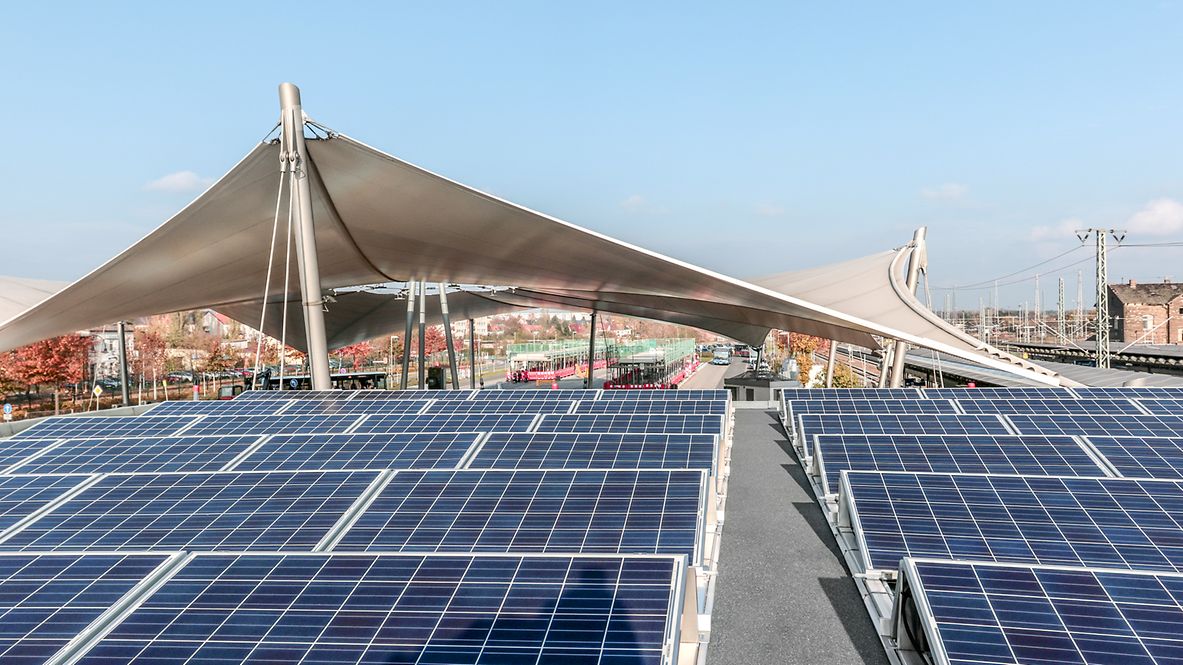
Sustainability is one of Deutsche Bahn's key promises to its customers. This commitment begins even before the journey – at the train stations. DB has therefore developed an innovative concept to combine modern ecological standards with a high level of comfort for travelers. With the "Green Stations", attention is already paid to the use of resource–saving materials during construction. Modern technologies and energy from renewable sources are also used during operation.
The interplay of the various components makes DB's "Green stations" particularly sustainable. They are the first of their generation to obtain their energy for heating, hot water and lighting from on–site geothermal and photovoltaic systems. This allows them to be largely self–sufficient. To ensure a 100% supply of renewable energy even at peak load times, the additional required renewable electricity is sourced from the public power grid. In the event of overproduction by the systems, the surplus renewable power is fed into the public power grid.
Green roofs provide natural cooling and collect rainwater. Large windows or skylights also provide sufficient daylight and reduce the building's energy requirements. Ecological building materials are also used – from the timber roof structure to building materials from the region and other sustainable materials.
Deutsche Bahn opened its first "Green station" in Kerpen–Horrem in North Rhine–Westphalia back in 2014. The second is located in Lutherstadt Wittenberg in Saxony–Anhalt. And there is also a "Green station" in Bitterfeld. Recycled aluminum, a photovoltaic system and climate–friendly district heating make it particularly sustainable.
Innovative and resource-conserving "Small green stations"
Deutsche Bahn also aims to build more sustainably at smaller locations. For this purpose, the architects at DB InfraGO have developed a modular system that relies on resource–conserving modular timber construction.
This saves around 50 percent of greenhouse gas emissions compared to conventional construction methods using reinforced concrete.
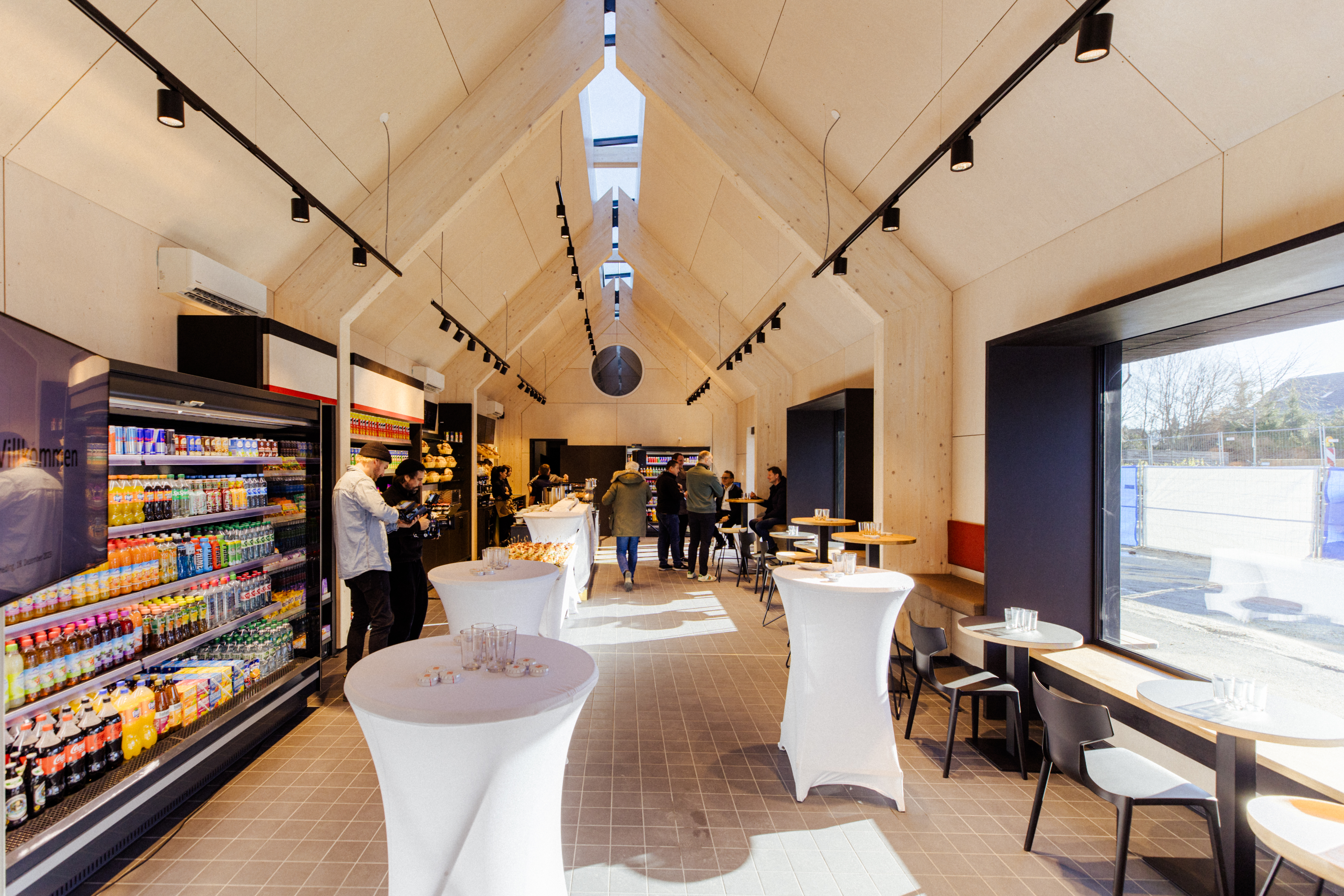
The elements are assembled individually and adapted to the respective location. They are delivered prefabricated and assembled on site within a few weeks. In this way, a building concept is created each time that best meets the local conditions and the needs of the travelers. The operation is also sustainable and saves greenhouse gas emissions, for example through photovoltaic systems, a battery storage system from DB's own start–up encore and heat pumps.
-
Around 50 percent greenhouse gas emissions saved thanks to timber construction
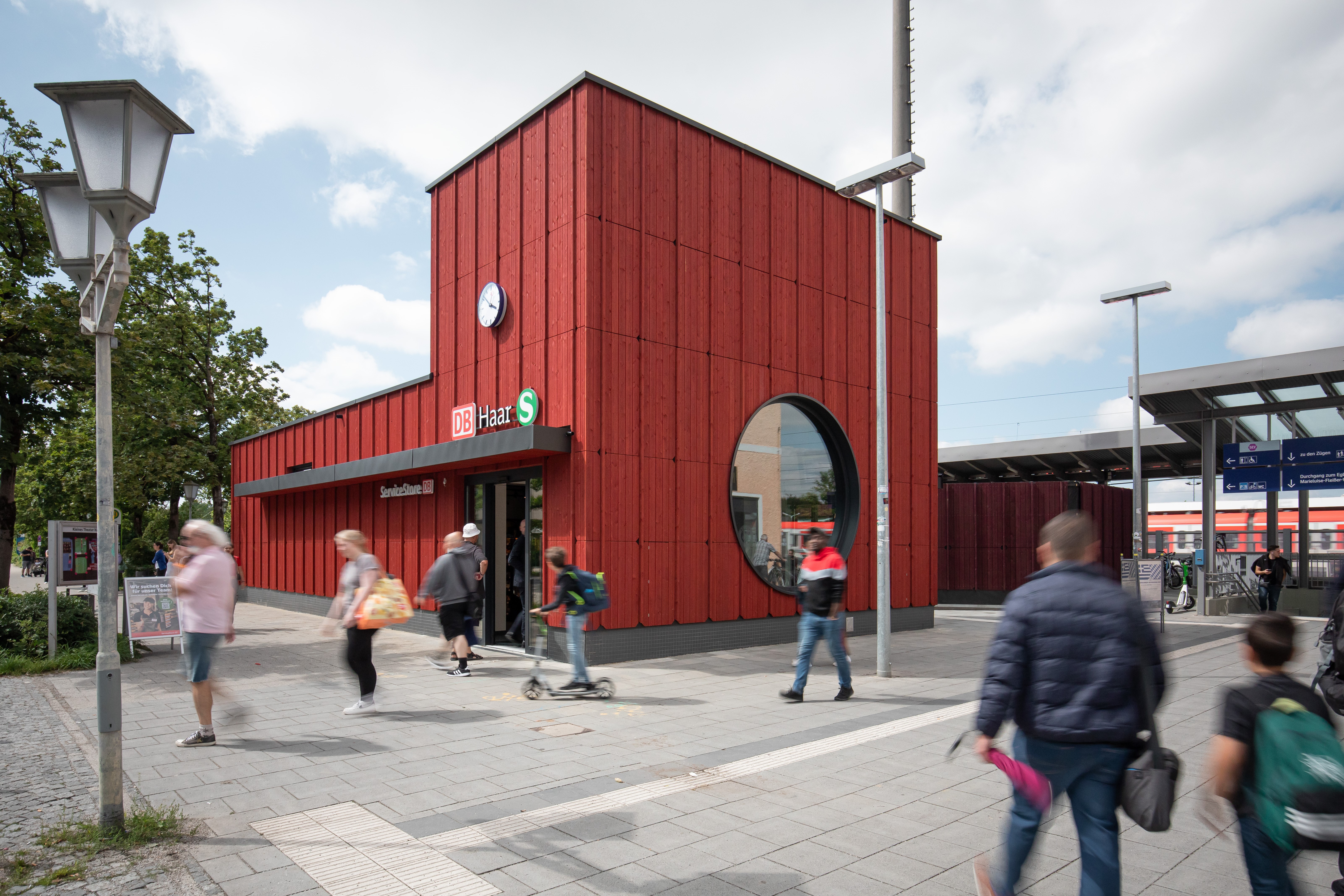
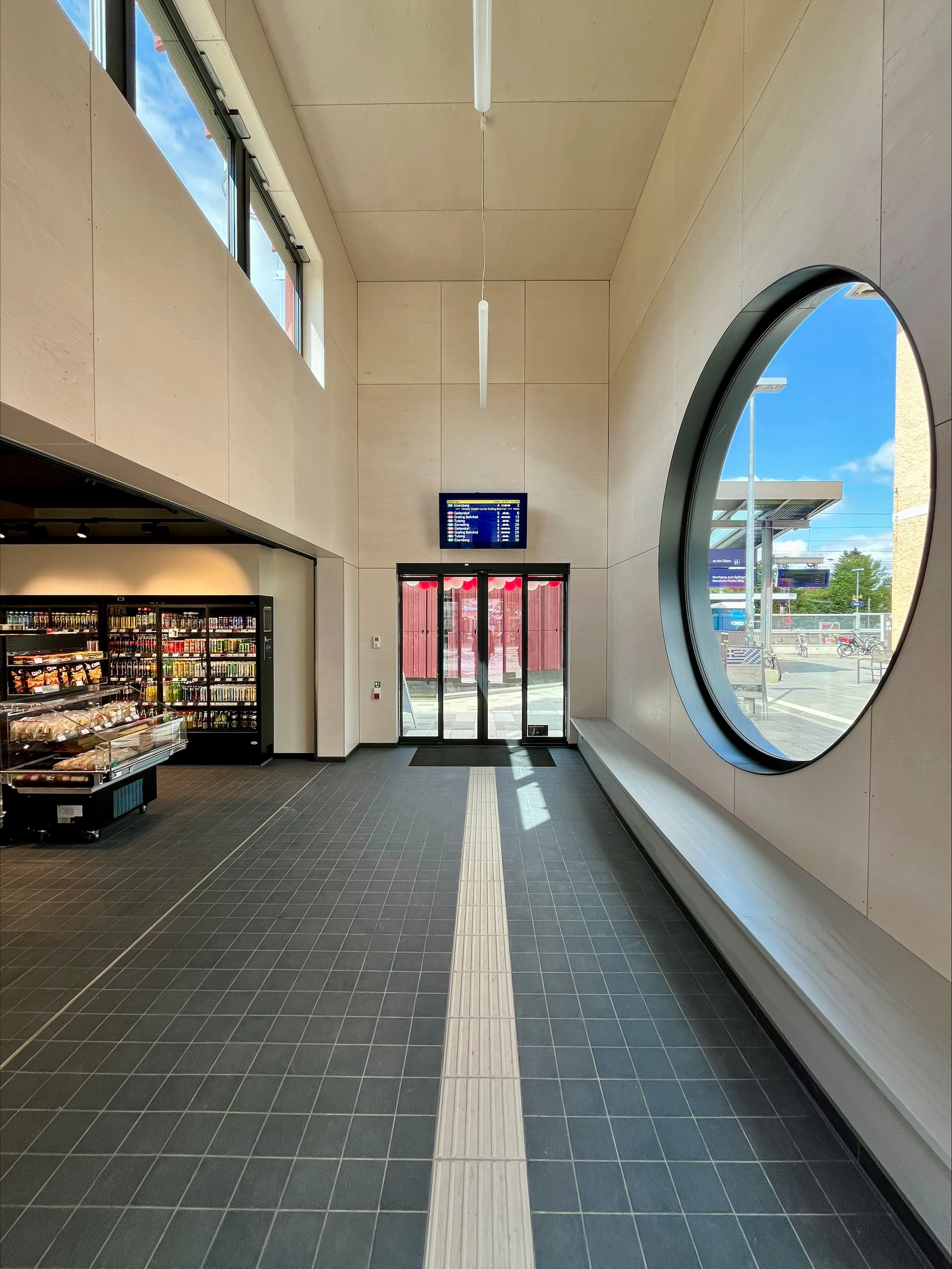
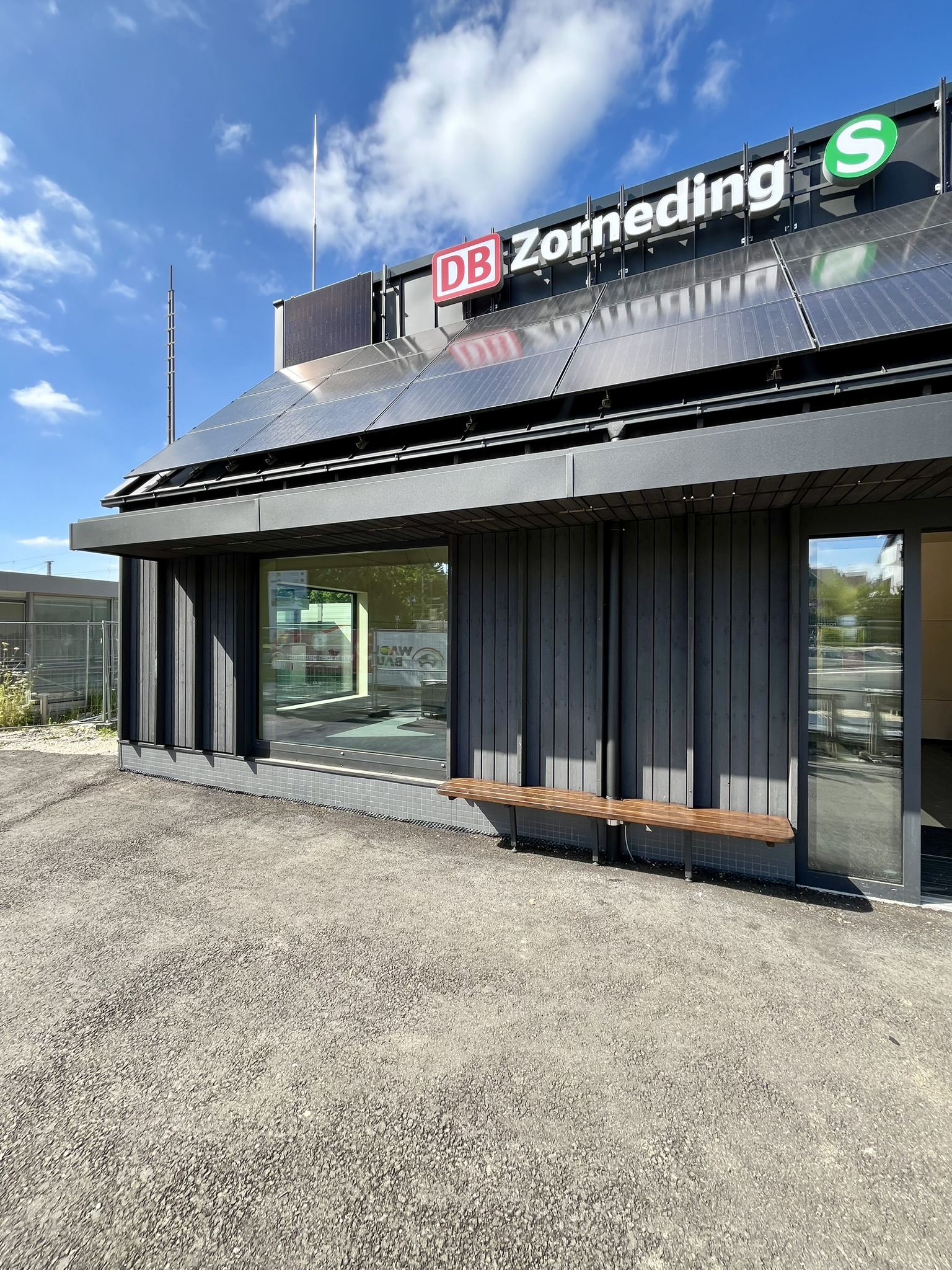
In December 2023, DB inaugurated the first of these "Small green stations" in Zorneding in Bavaria. A second sustainable station building went into operation at Haar station in July 2024. Just like in Zorneding, this station building is made entirely of prefabricated wooden elements and is operated in a climate-friendly manner thanks to a heat pump and photovoltaic system. A large round window at the front provides sufficient daylight and thus reduces the need for artificial light. Environmentally friendly glazes were also used for the paintwork. The two "Small green stations" will not be the only ones. Further locations are being examined throughout Germany.
With this new concept, Deutsche Bahn will also be able to build sustainably and cost-effectively at smaller stops or at stations where there were previously no reception buildings.
The "Green stations" construction concept was awarded the German Transport Transition Prize in November 2024. DB received the special prize in the building culture category for its innovative and sustainable ideas to make public transport more attractive and create a better quality of stay.
Green electricity supply for all stations
Since 2025, DB has been taking a further step in terms of climate protection and has switched the power supply for all stationary facilities to 100% renewable power. In addition to the stations, this includes all maintenance depots, office buildings and facilities in Germany that are supplied by DB Energie GmbH. This also includes, for example, signal boxes, point heating systems and track area lighting. This brings DB one step closer to its goal of being climate-neutral by 2040 and reducing its total greenhouse gas emissions to net zero.


 Go
Go