
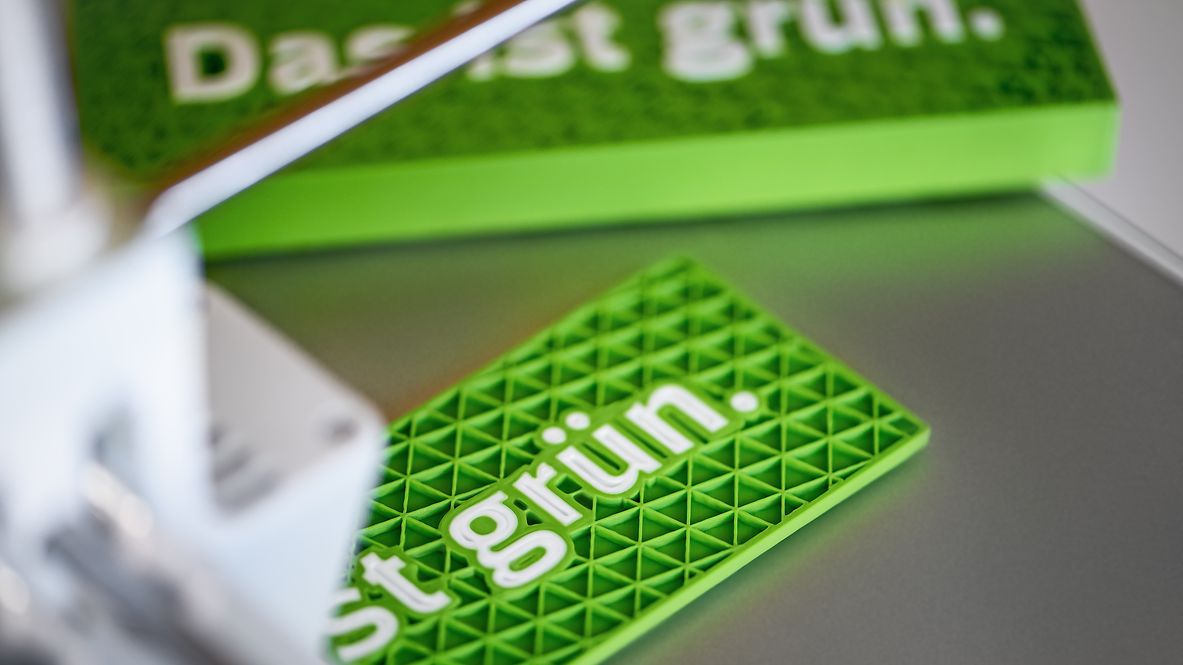
Trains consist of many individual components, many of which are unique. It often takes significant time and material to keep all parts available in small quantities. With 3D printing, Deutsche Bahn has found a solution to work more efficiently and resource-consciously.
In this computer-based process, components are first measured or scanned in their original form and then converted into digital measurement data. The part is then built layer by layer – whether it consists of plastic, metal, or another material.
For small components with finer structures, a powder-based process is usually used. In this method, the powder is melted layer by layer at the desired locations with a laser beam. Depending on the size of the part, this process is repeated hundreds to thousands of times. Alternatively, for larger and coarser structures, metal wire or plastic is melted and applied.
Recycled filament for sustainable 3D printing
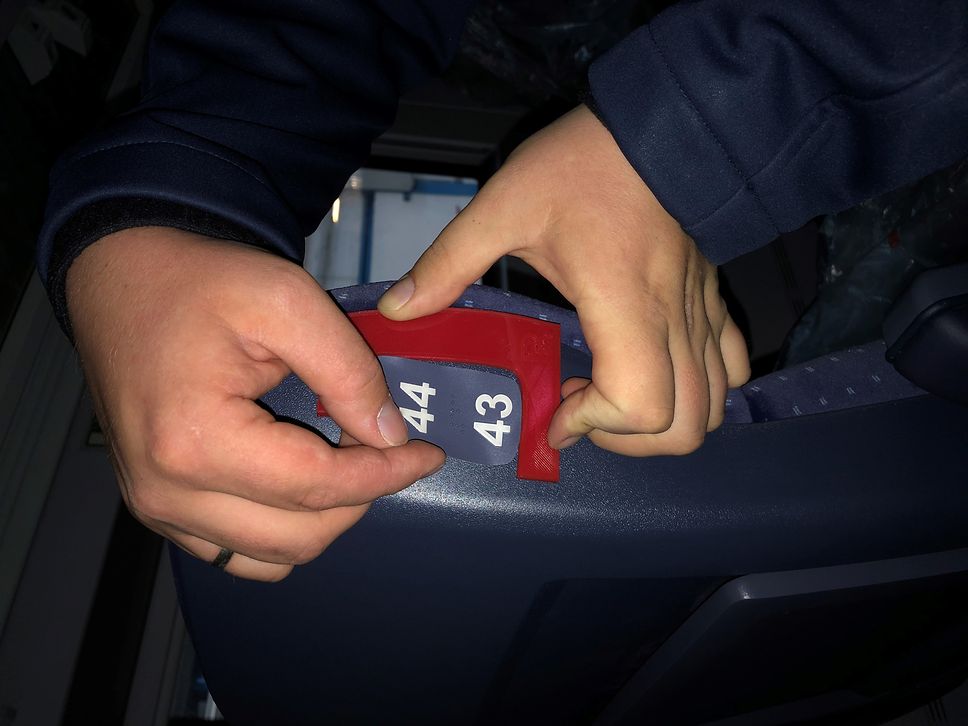
DB continuously tests new materials for 3D printing in its maintenance depots. This includes so-called filaments – a type of wire made entirely from recycled plastic fibers. Various RC materials are currently used for printing tools and other aids at DB. The first piece printed with recycled filament is a positioning device for applying symbols in trains. If the resource-efficient material proves successful in testing, it could be used in other areas as well.
Reduced raw material needs and transport distances
3D printing offers even more environmental benefits. It allows to produce components exactly when they are needed – and in next to no time. In this way, long waiting times can be avoided, and trains are getting ready for use on the track more quickly. 3D printing can be used to replace components that are no longer available, extending the life cycle of assets.
Moreover, 3D printing saves not only time but also valuable raw materials, as spare parts no longer need to be stored in large quantities – they can be produced on demand. Greenhouse gas emissions are reduced because parts can be printed on site instead of transported over long distances.
Dedicated recycling loop for print waste
3D printing generates very little waste, but not every print is perfect, and some scrap material and waste occurs. For this reason, DB has developed a nationwide recycling loop for 3D print waste of the most commonly used materials in collaboration with the company Recycling Fabrik.
The waste is first shredded by the DB partner and then processed into granules. Special machines rewind the recycled filaments onto reusable spools, allowing the plastic fibers to be reused like new material. This process reintegrates materials that would otherwise be discarded.
Learning 3D printing during training
3D printing is an integral part of DB training programs. Vocational trainees in vehicle maintenance depots are introduced to 3D printing early on, designing and printing aids for everyday use on site.
Innovative ideas recognized
The best 3D printing ideas are awarded annually in a Group-wide competition. From lamp holders to replacement covers for surveillance cameras and robotic tools for filling ICE tanks – the award-winning 3D printing applications are diverse. In the special sustainability category, a bench made of recycled concrete was recently recognized. In 2025, 3D printing at DB celebrates its 10th anniversary.
-
Over 200000 parts already produced via 3D printing
Future technology with demand
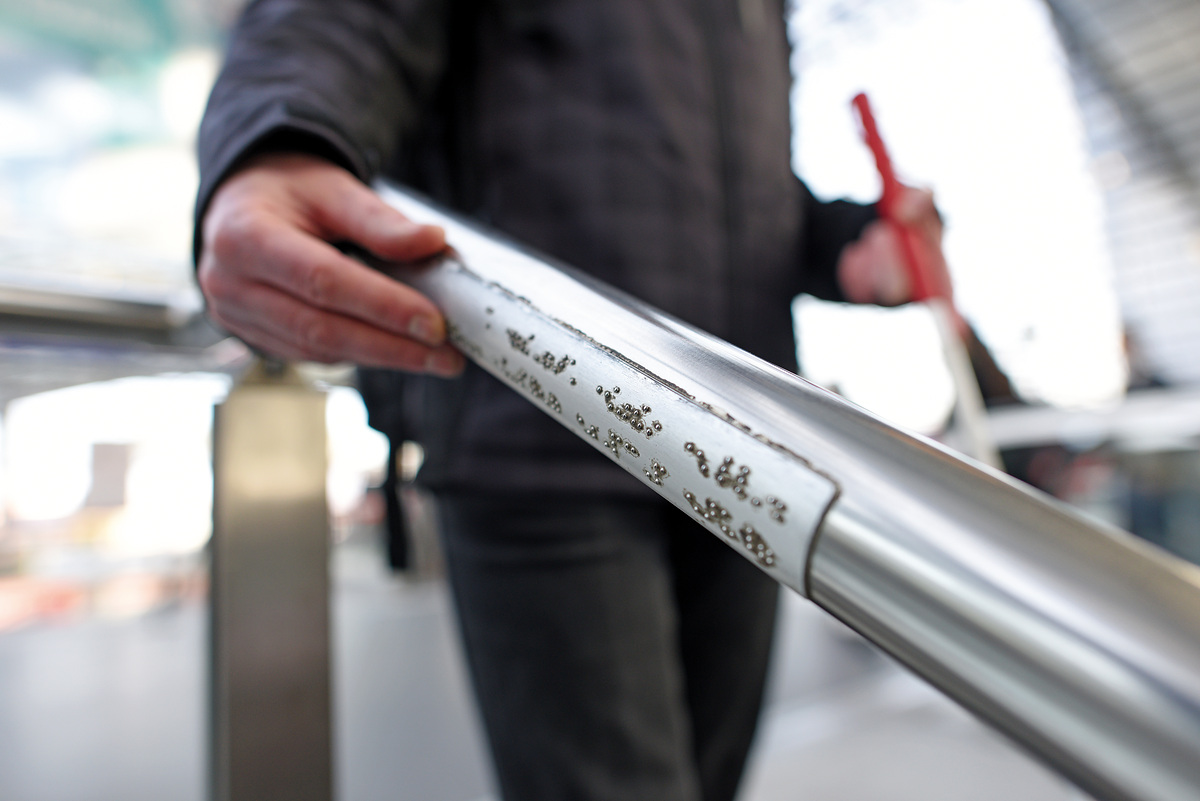
The potential for expanding 3D printing at DB is enormous. More than 200,000 (spare) parts have already been printed in over 1,000 different applications. The range of components includes coat hooks, CO2 sensors for office spaces, handrail signs in braille and safety-critical parts in vehicle braking systems.



 Go
Go