
To achieve German and European climate targets, a sustainable shift of transport to rail is essential. Electrified rail transport is one of the most climate-friendly forms of mass mobility. A key factor is efficient and quiet handling of goods—such as at MegaHub Lehrte. In the so-called fast transshipment base, up to 269,000 loading units can be handled annually when operating at full capacity. This is equivalent to 20 large container ships' cargos. Modern technology in the form of a fully automated sorting system ensures this work is done with minimum noise and maximum energy efficiency.
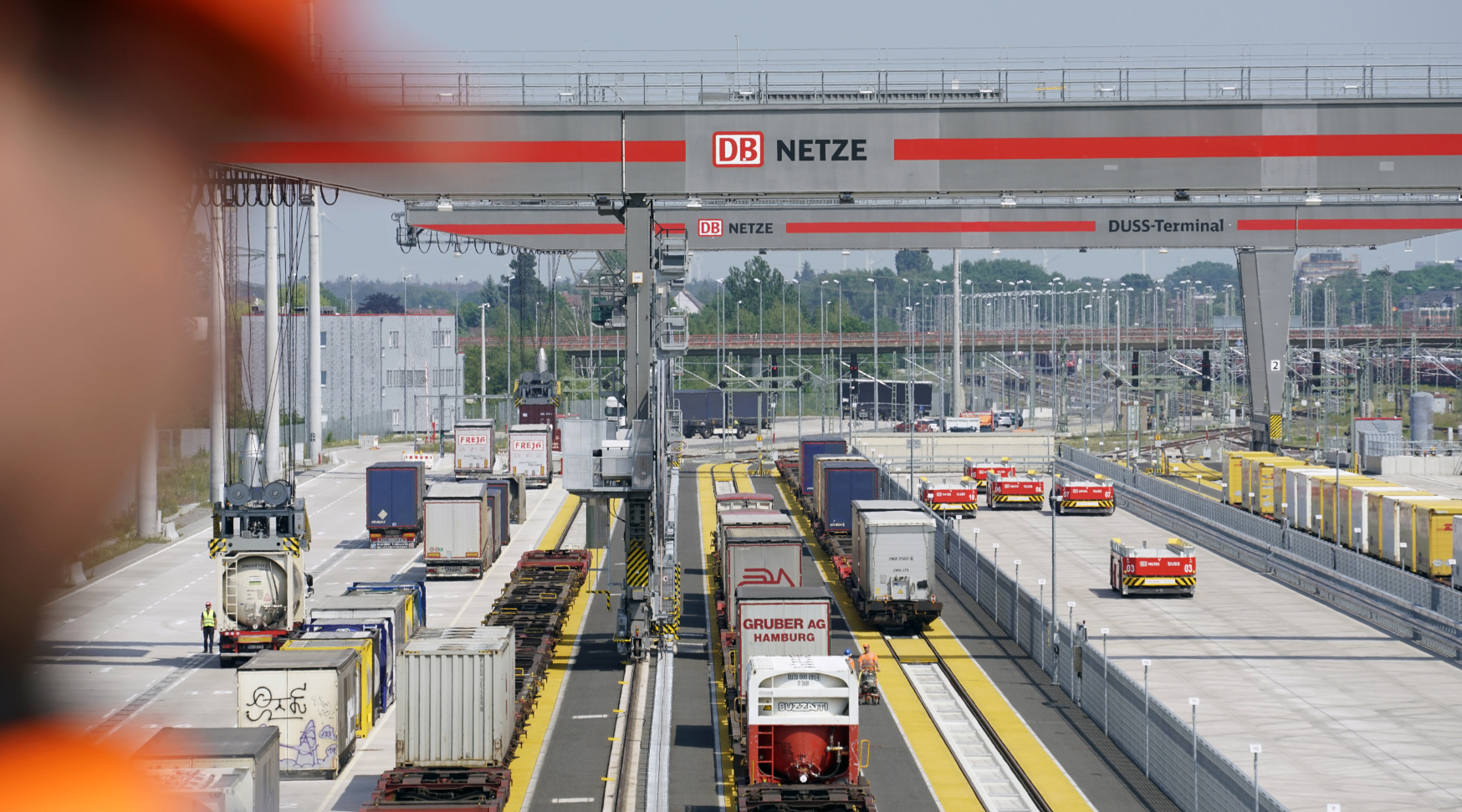
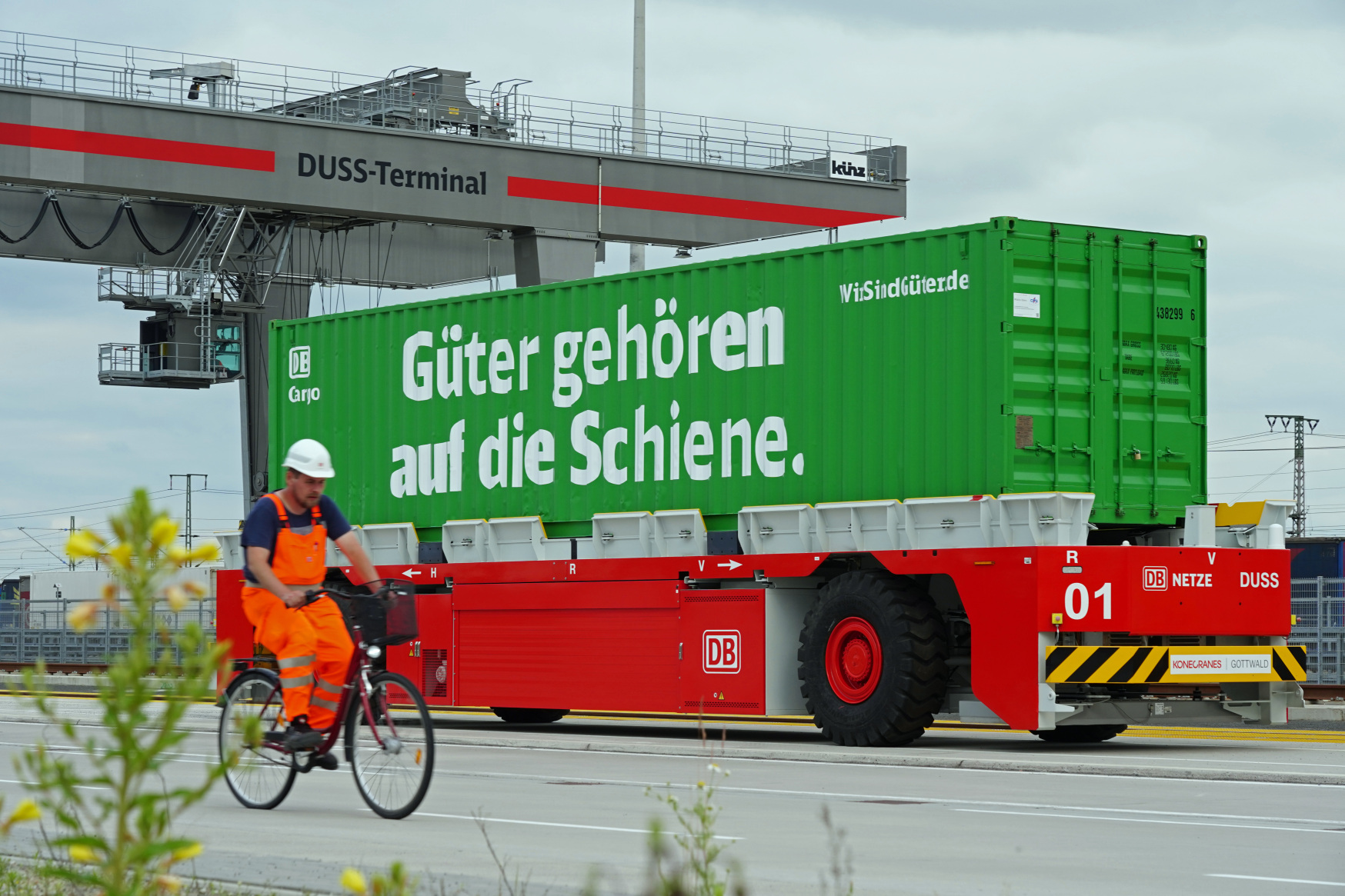
Efficient loading is ensured by a fully automated sorting system. Incoming freight trains are regrouped according to their destination station and containers are transferred from trucks to rail. Autonomous, fully electric transporters ferry freight from A to B at the site. These AGVs (automated guided vehicles) bring the freight to the designated cars. This avoids unnecessary crane usage, and it completely does away with the work of shunting trains. It also generates significantly less noise and CO2, while letting eliminate up to 384,000 truck trips every year at full capacity in the final stage.
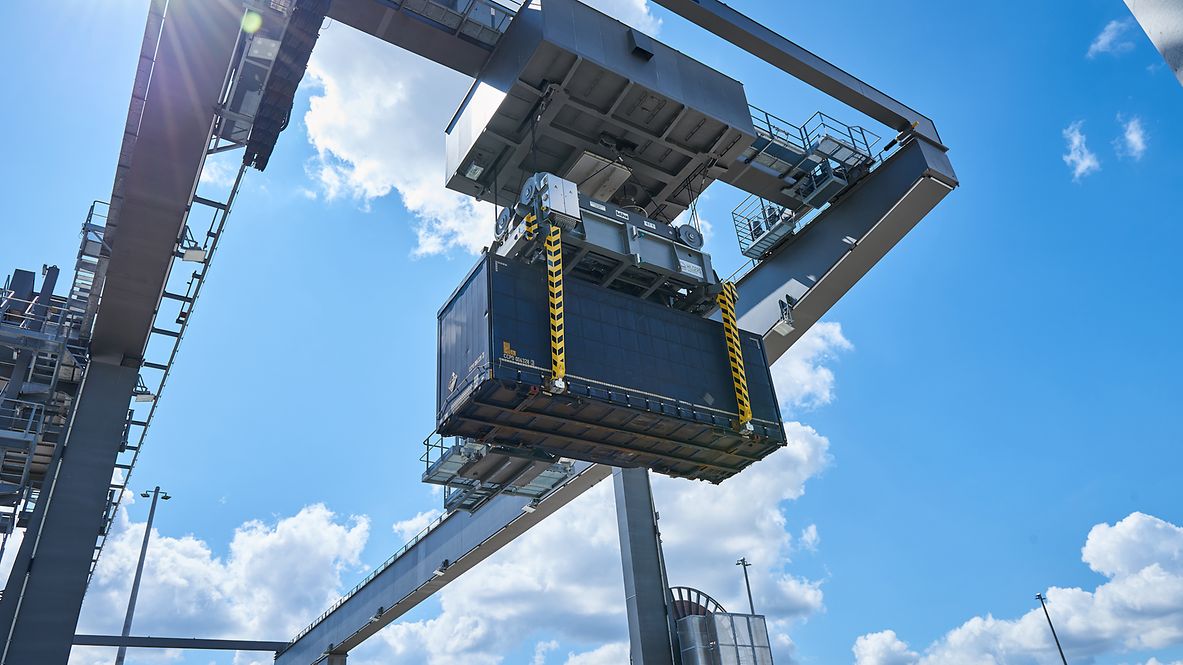
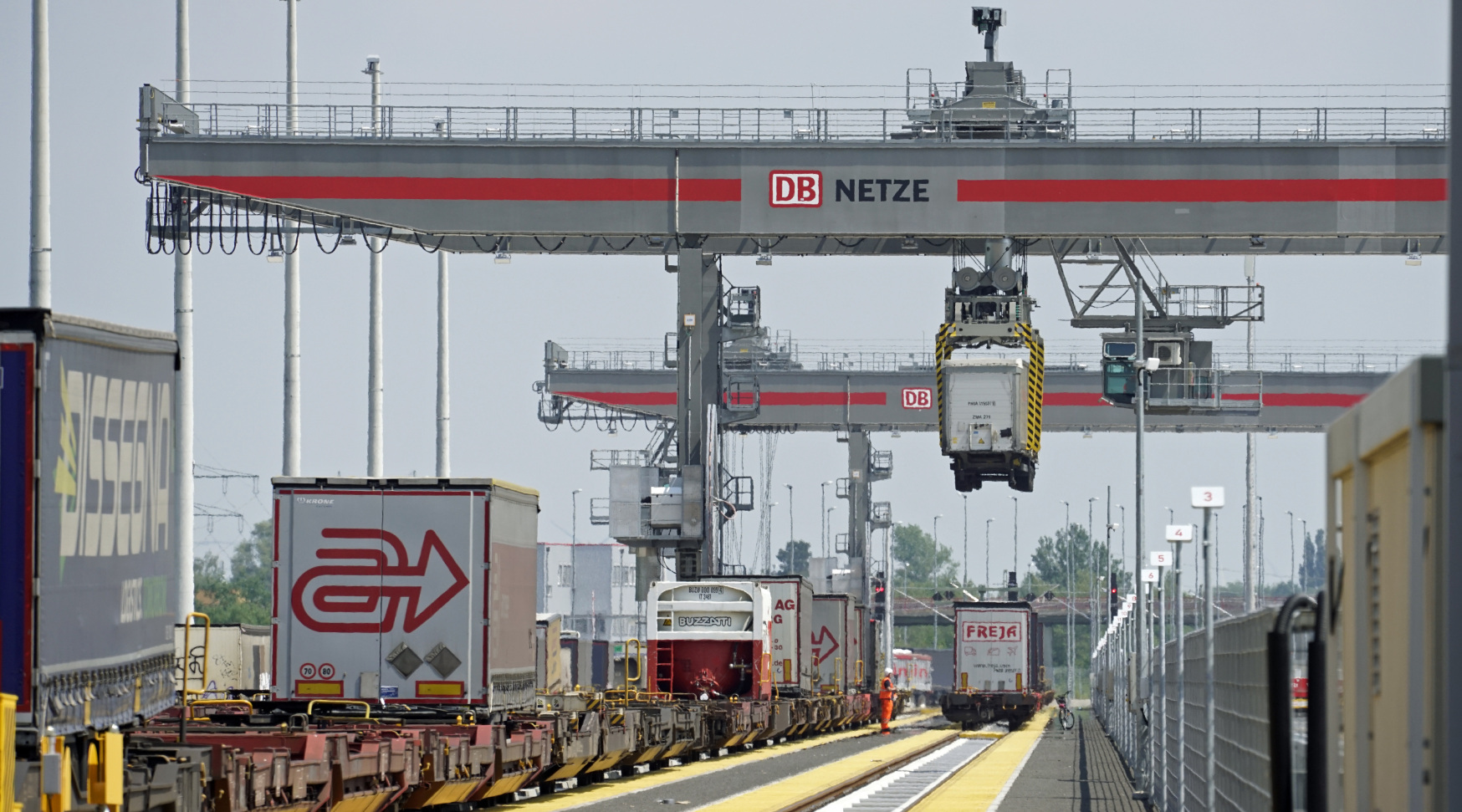
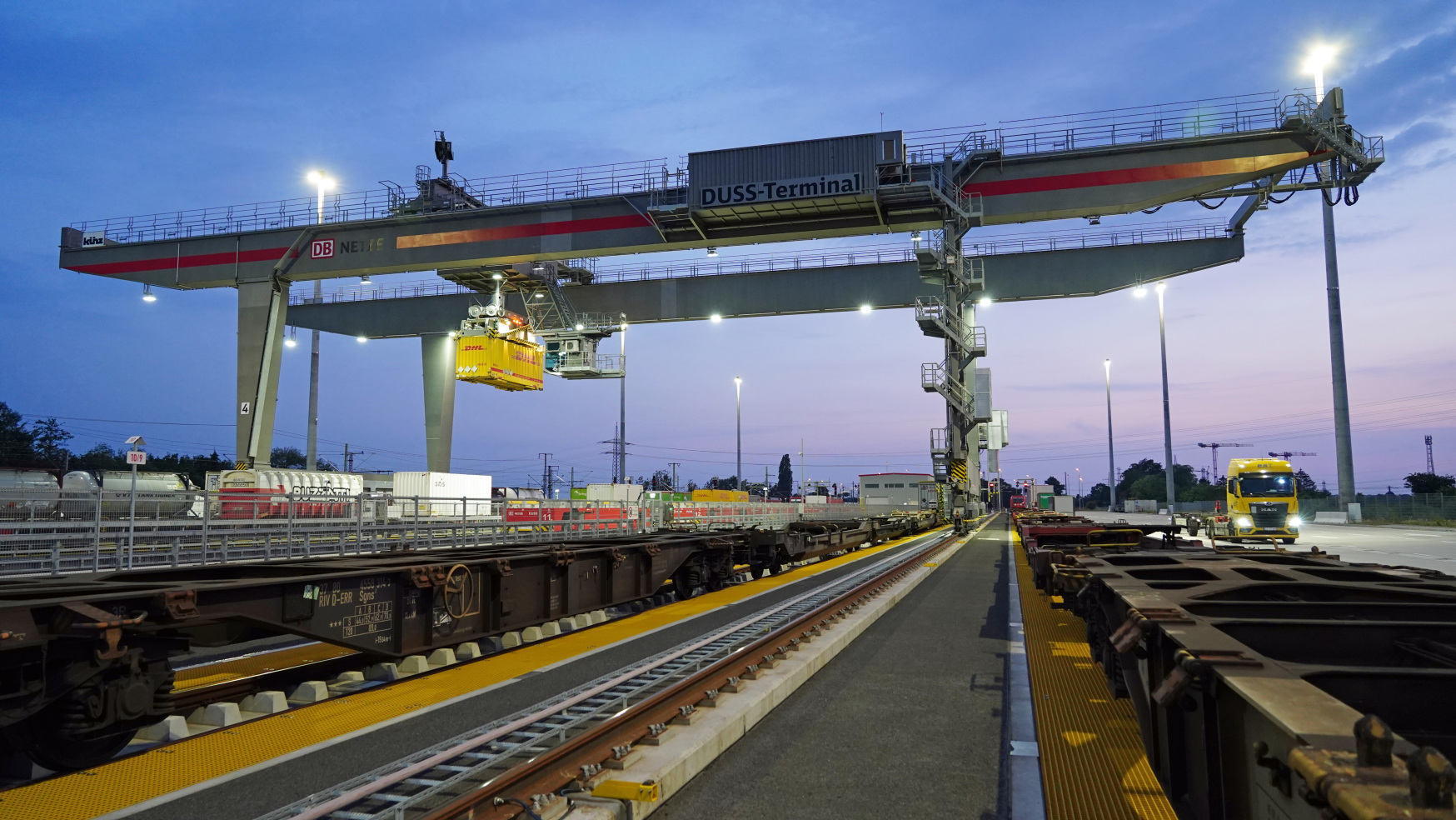
Loading and unloading is handled by the approximately 20-meter-high semi-automatic portal cranes. They lift loading units weighing up to 40 tons between freight trains or between train and truck. The cranes operate especially energy-efficiently: unused braking energy is captured, fed back into the power grid, and can be used elsewhere. In addition, software calculates the most efficient route for the cranes and AGVs to reach their destination.
 Go
Go