
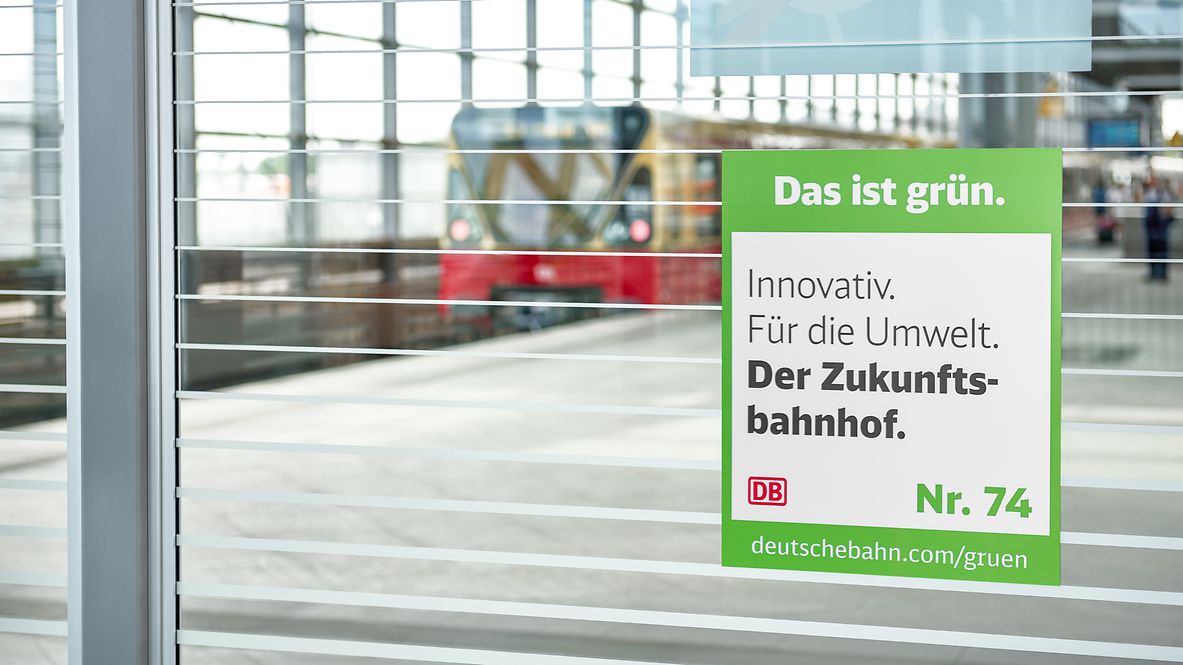
As a climate-friendly mobility provider, Deutsche Bahn plays a key role in driving the sustainable transport transition. Every day, several million passengers already use DB’s trains and stations. To inspire even more people to choose rail in the long term, the infrastructure must be adapted sustainably to the needs of travelers.
With its “stations of the future,” Deutsche Bahn is developing its station infrastructure in innovative and sustainable ways: the focus is on a holistic approach to stations along the passenger journey – from the transport hub to the reception building, the forecourt and onward traveling.
To this end, DB has created a comprehensive concept in which every “station of the future” must fulfill certain core characteristics:
Customer-oriented

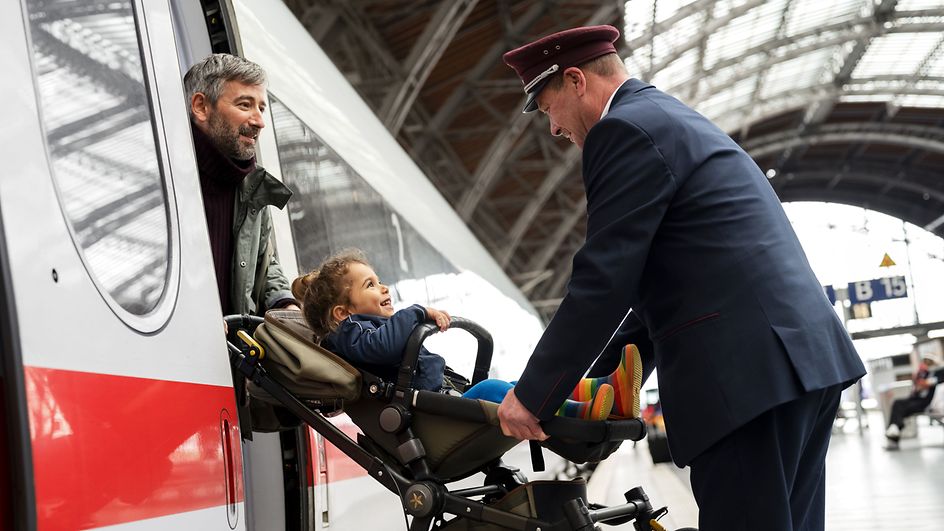
To enhance customer orientation, DB is making stations more inviting and attractive, ensuring that travelers feel both safe and comfortable. This includes bright entrances, inviting common areas and step-free accessibility to the platform to ensure the greatest possible accessibility. In this way, stations become appealing starting points, transfer points, or destinations for every journey.
High-performing

Deutsche Bahn also wants to enhance the performance of its stations for more travelers. Through targeted measures, station capacity is being increased. A new organizational system creates clarity and makes room for better passenger distribution along the platforms.
Sustainable

A sustainable design in both construction and operations is another core element firmly anchored in DB’s concept for the “stations of the future.”
To improve onward mobility and the surrounding station environment, DB works in partnership with federal states, cities, and local authorities. Particular focus is placed on expanding bicycle parking, shared mobility at stations, and climate-resilient spaces in surrounding areas. For this, DB has established the "Competence Center for Station Forecourts and Onward Mobility", which supports municipalities as a partner.
-
113 stations of the future in 2024
In 2024, DB developed 113 stations into “stations of the future.” By 2027, a further 100 will be added each year.
Sustainability as a guiding principle
To achieve the vision of the “station of the future,” DB has defined quality requirements and standards based on market research data and specific customer satisfaction surveys. These standards are tailored to different station types. A systematic comparison of the target versus the actual state for each station, shows highlights areas for improvement, which are then summarized in so-called station plans as the basis for implementation. As a key component of these standards, the sustainability element was developed.
Use of photovoltaics
At every “station of the future,” DB examines whether it is technically and economically feasible to install photovoltaic systems. Where possible, these can be installed either on reception buildings or on newly built or refurbished platform roofs and enable a climate-friendly energy supply.
Energy-efficient LED lighting
DB is also upgrading its lighting systems with energy-efficient LED technology. This not only reduces electricity consumption but also extends the service life of the lighting and reduces material consumption.
Climate-friendly heating
To reduce greenhouse gas emissions in heating, DB is replacing outdated heating systems, phasing out fossil fuels, and increasingly relying on renewable energies such as heat pumps, district heating, and waste heat utilization. In this way, DB is making sustainability an integral part of its “stations of the future.”
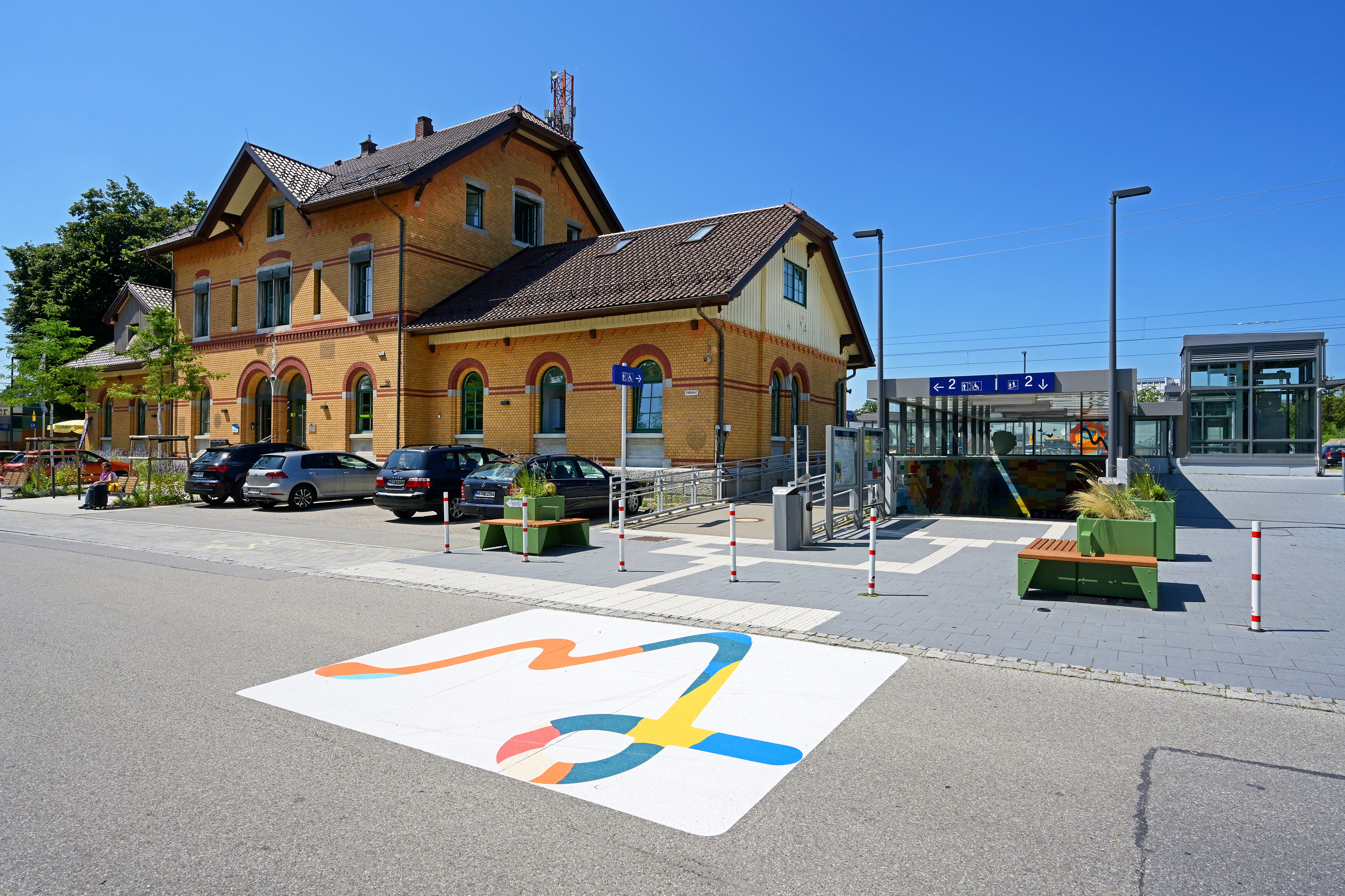
Living color diversity in Wangen (Allgäu)
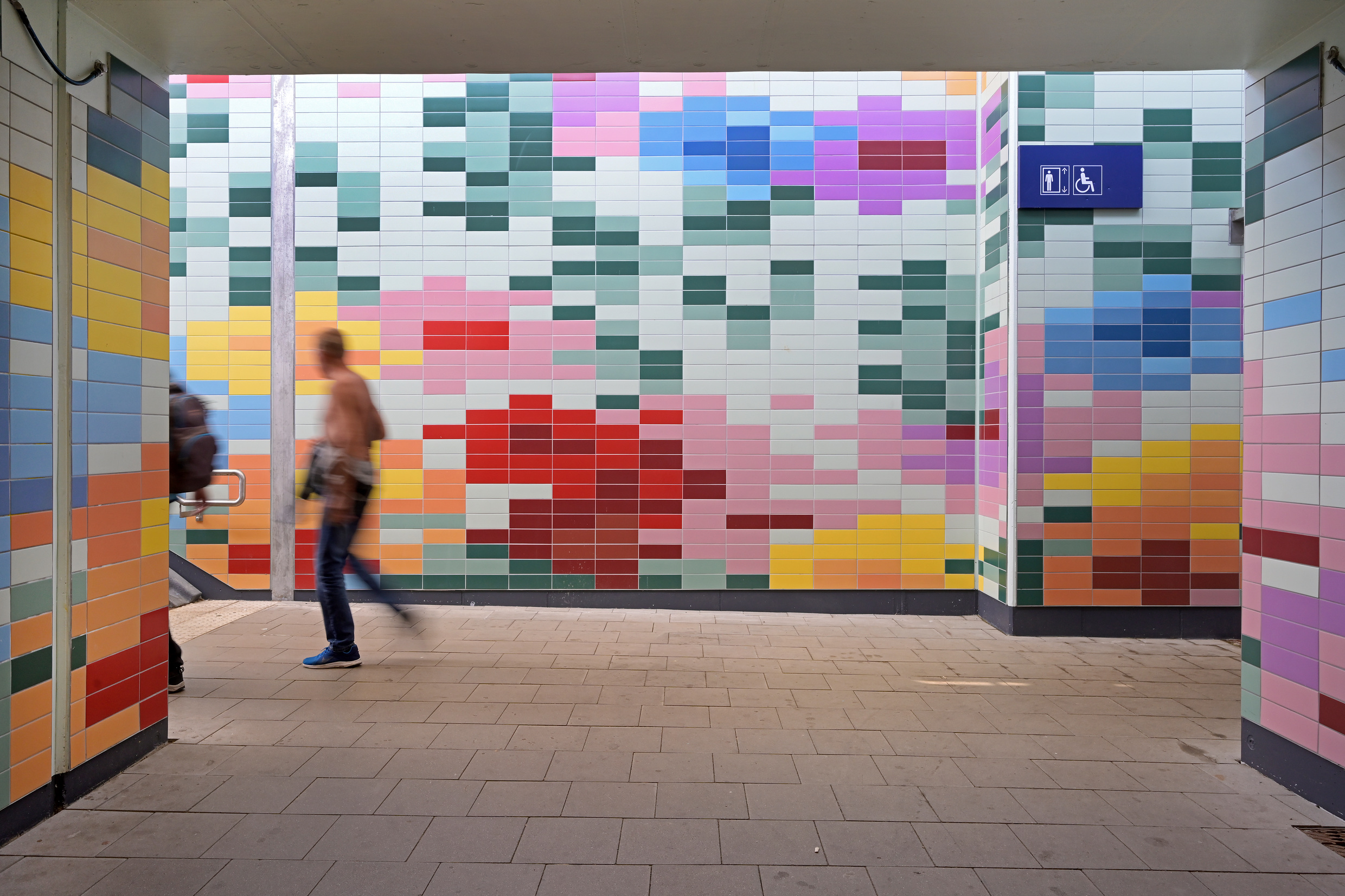
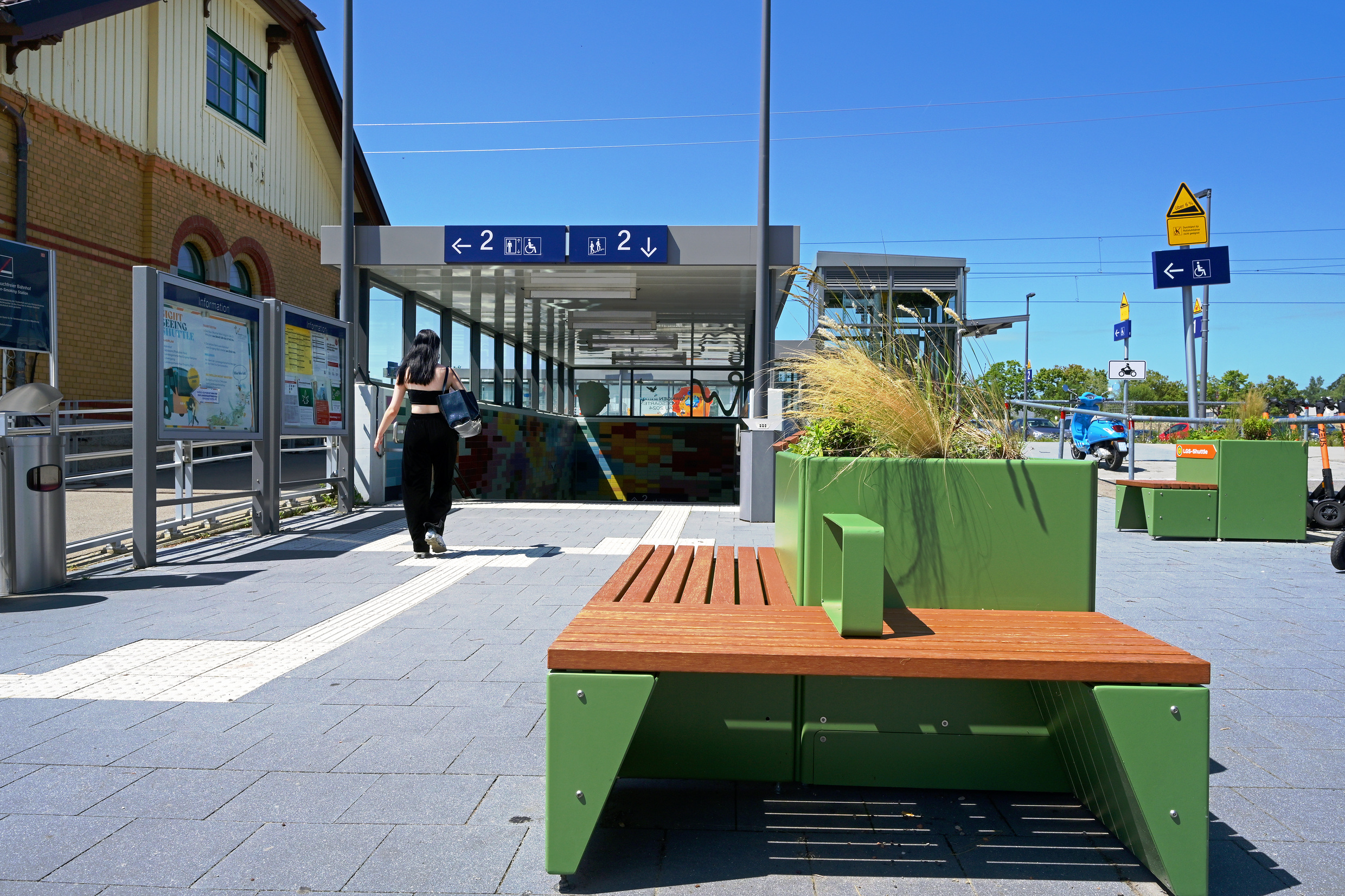
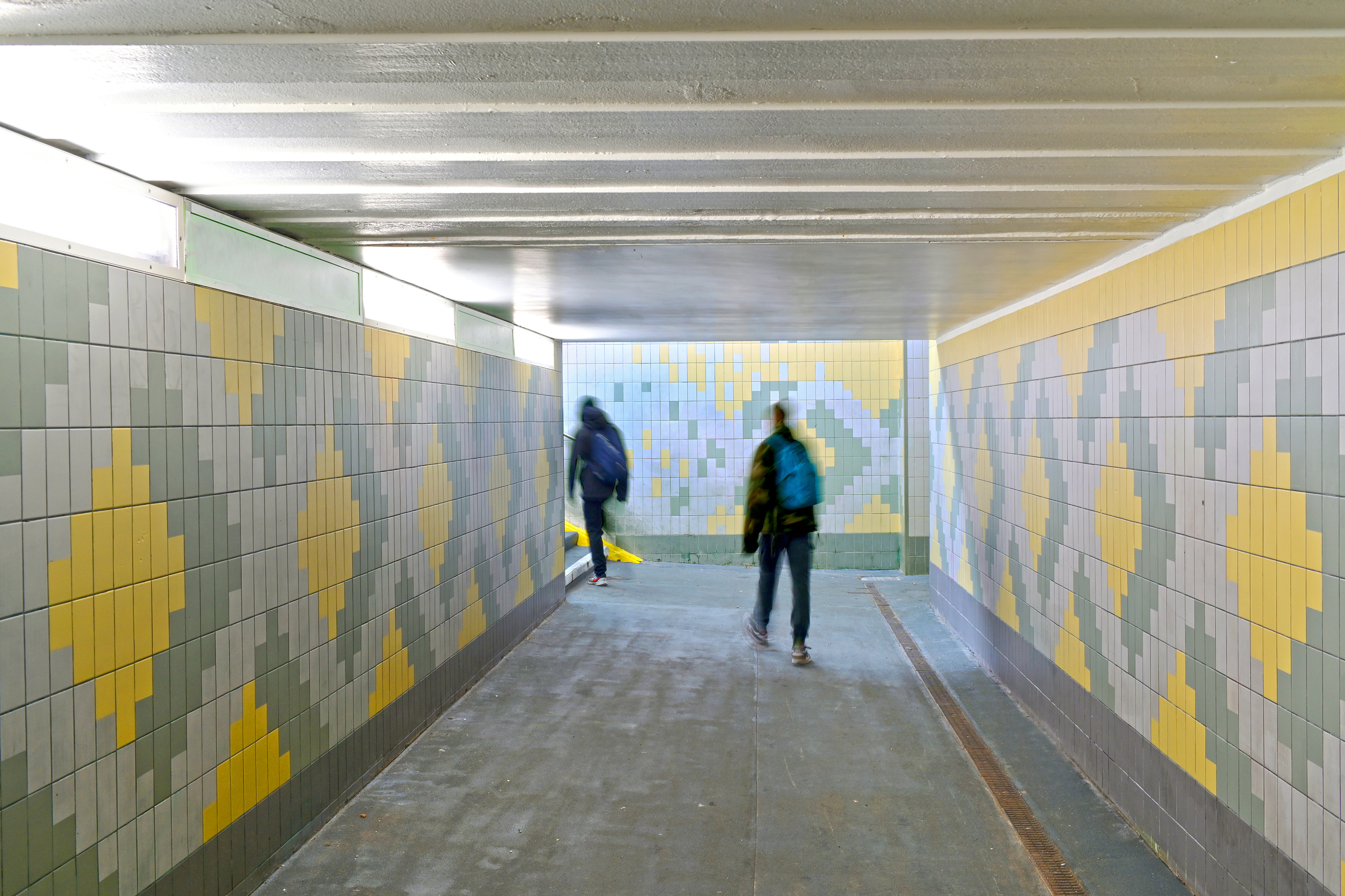
The region around Wangen im Allgäu is particularly characterized in summer by colorful meadows with native plants such as cornflowers and bellflowers. The tiles in the newly redesigned pedestrian underpass now reflect this diversity of the local Allgäu landscape. On the station forecourt, newly planted trees, “open space kits” with plant containers, and newly arranged parking areas create a harmonious overall impression.
Enhanced comfort in Werder (Havel)
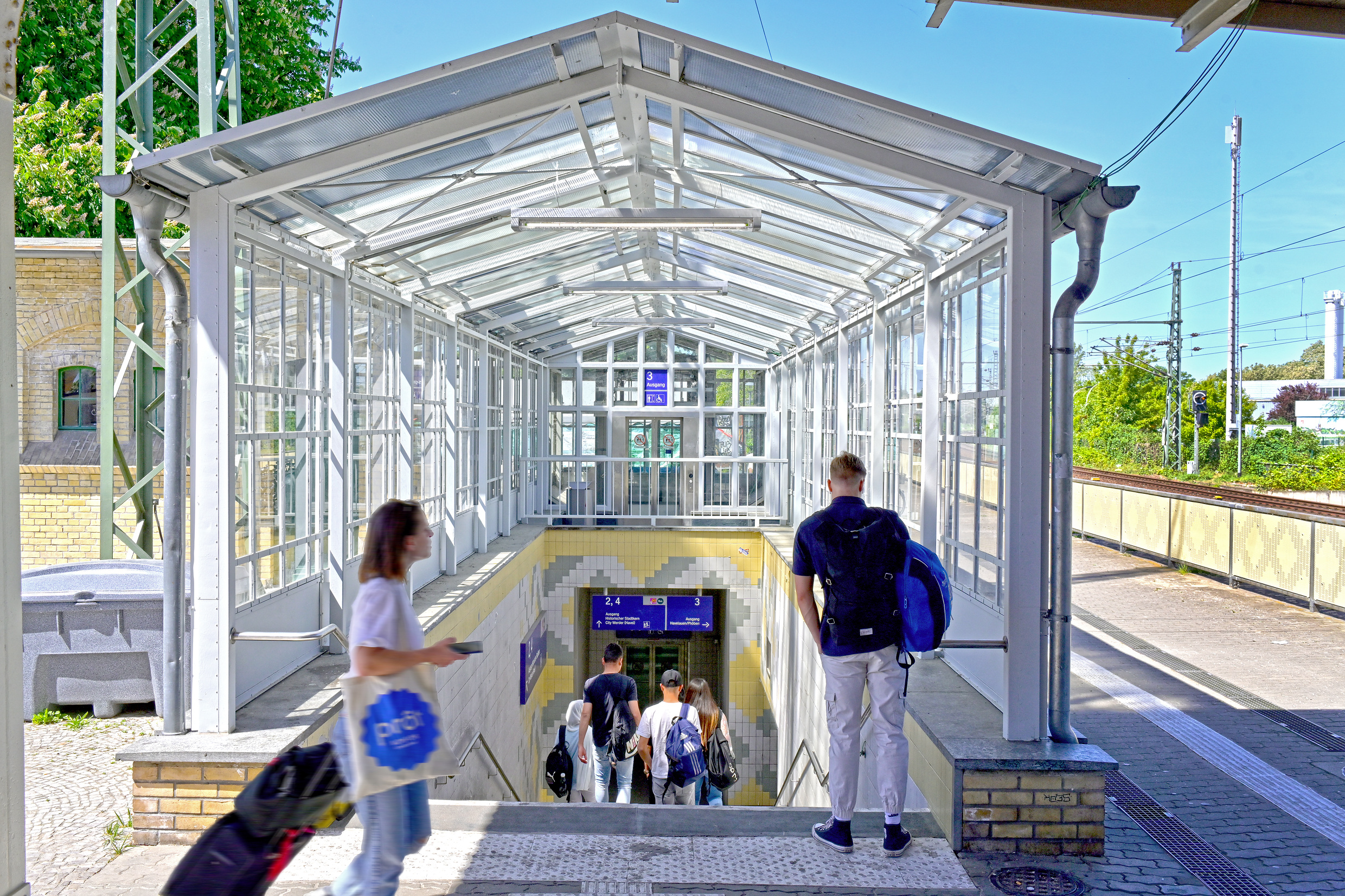
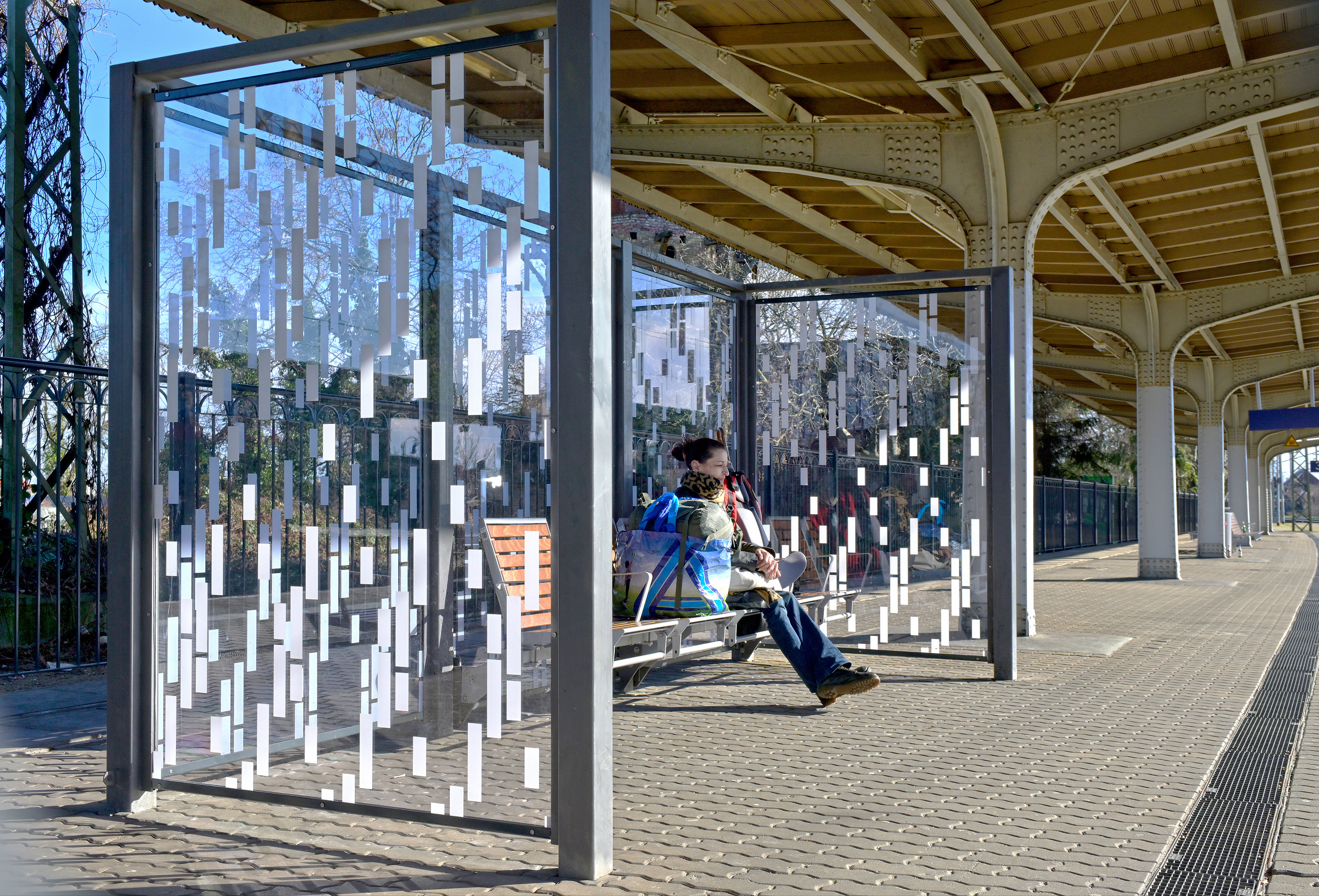
At the “station of the future” in Werder (Havel), Brandenburg, history and modernity are skillfully combined. DB has complemented the listed architecture with contemporary design elements inspired by the regional brick production. Sustainable lighting, green seating areas, and modernized platforms create an inviting atmosphere.
A modern mobility hub in Erftstadt
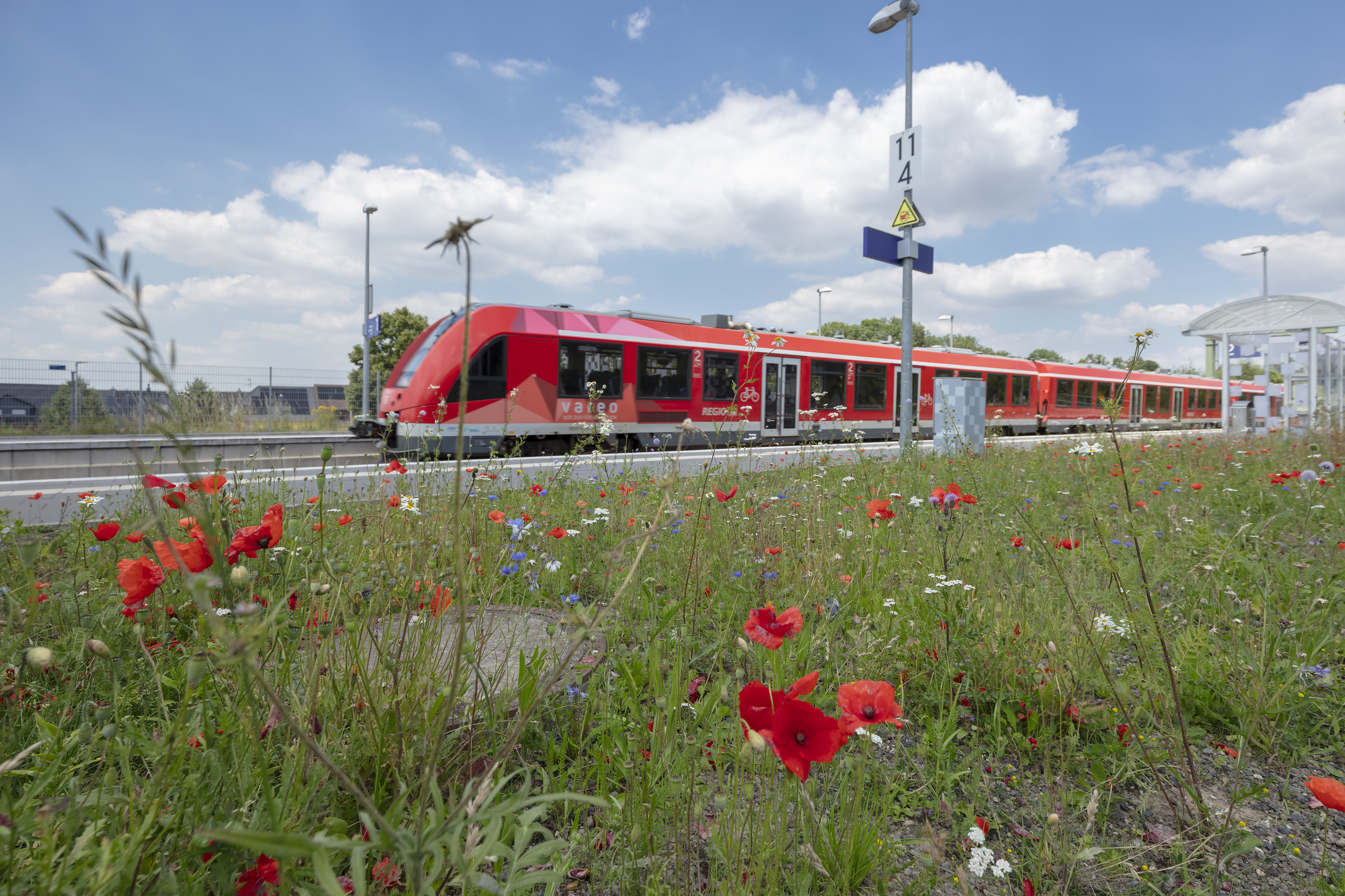
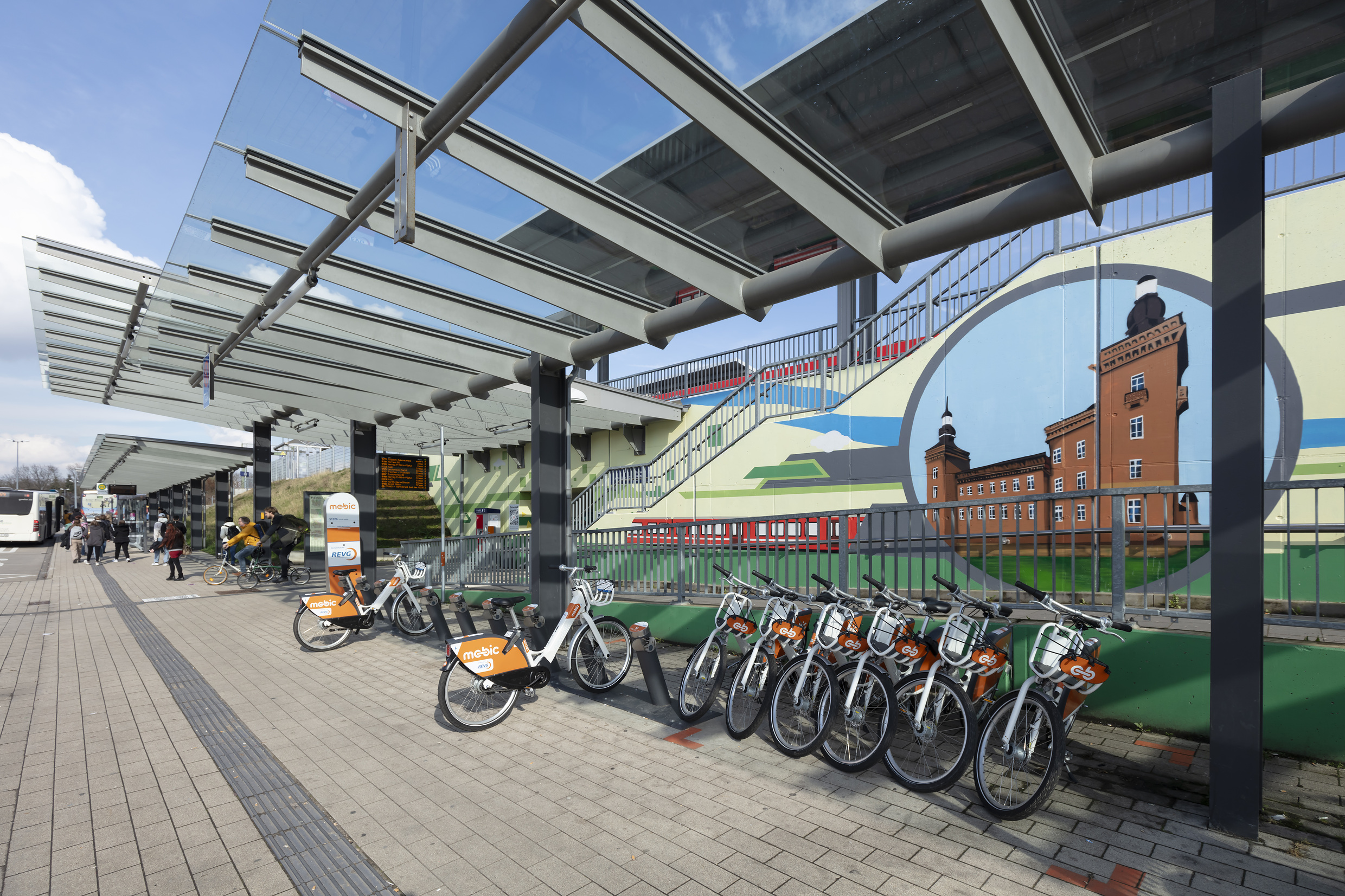
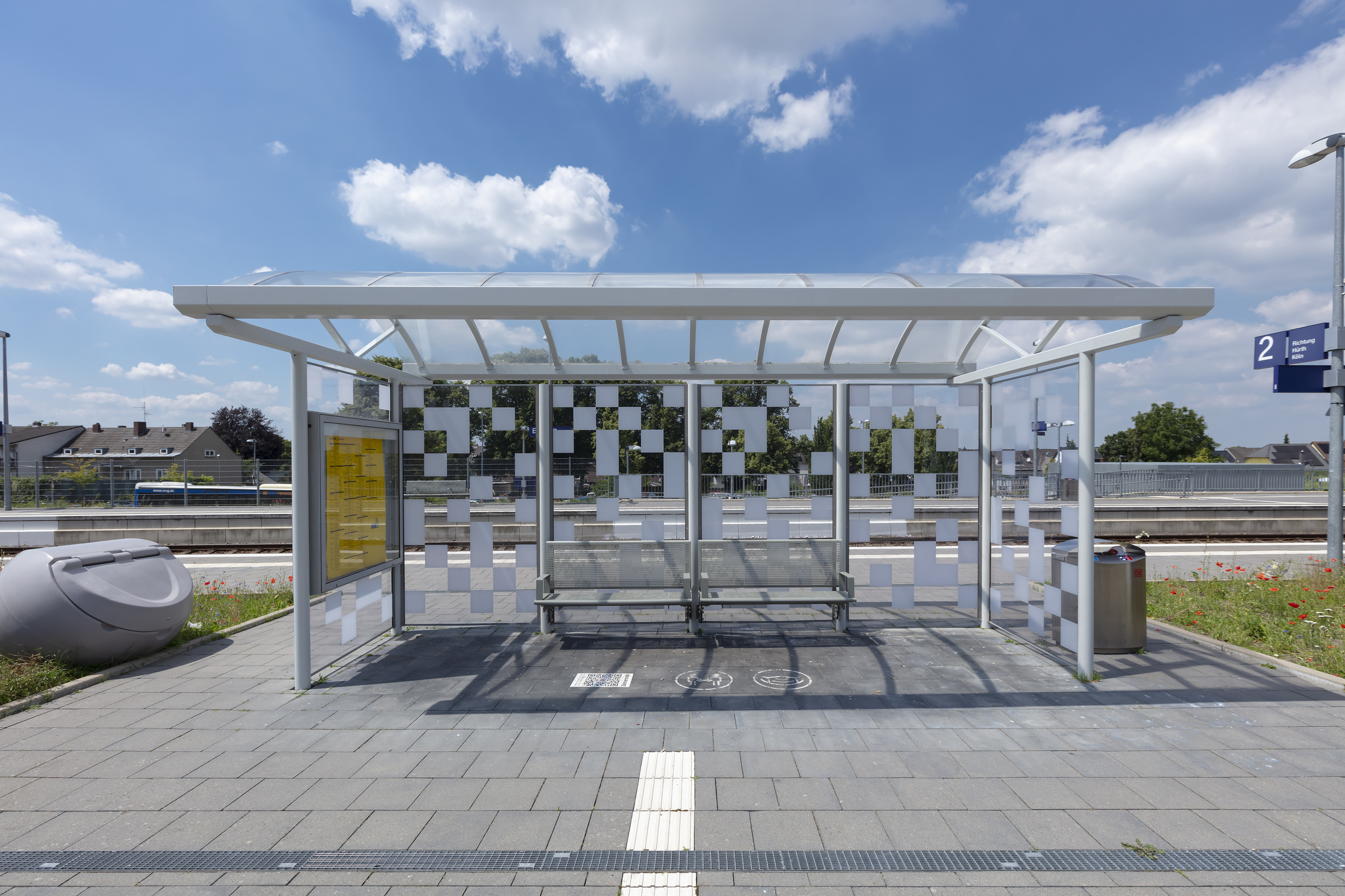
In Erftstadt, North Rhine-Westphalia, DB is bringing nature directly to its “station of the future.” Through extensive renaturation measures, many fallow areas around the station have been transformed into wildflower meadows. A new bicycle parking facility, sufficient car parking, and an attractive forecourt with sanitary facilities and a kiosk make the station a true mobility hub.
Pilot phase paved the way
Between 2019 and 2021, during a pilot phase, DB modernized 16 stations across Germany together with partners from business, science and local communities, testing innovative concepts. The aim was to find new ways to make stations not only more functional and customer-friendly but also more sustainable. This was intended to significantly increase passenger satisfaction while creating sustainable services.
Among the measures tested during the pilot phase were new passenger information systems, new energy concepts, and improved cycling infrastructure around stations. The results showed: at all pilot locations, passenger satisfaction improved significantly. Despite regional differences, each station gained a unique quality of stay. This successful testing phase laid the foundation for the new standardized concept of the “stations of the future.”


 Go
Go