

Deutsche Bahn's rail network covers about 33,000 kilometers. Many of the rail lines are situated next to forested areas. Endless trees, bushes and plants are at home here. In order to preserve this habitat, while at the same time ensuring that the trains can travel reliably and safely, DB is carrying out sustainable vegetation management. This involves coordinating the interaction between various measures on and around the track.
Sustainably planned and implemented
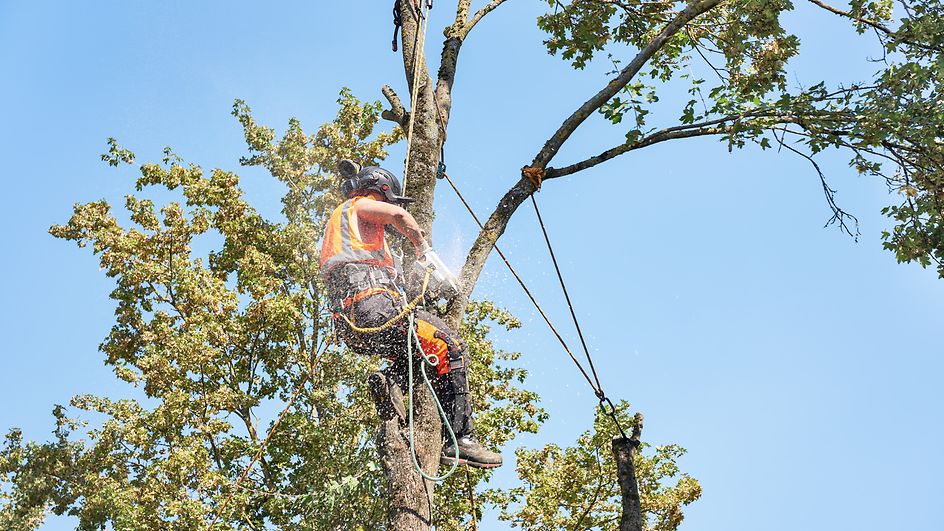
Passenger safety is DB’s top priority. That's why trees and bushes along the lines are properly trimmed and do not encroach on the tracks or restrict the view of lineside signals. Vegetation within a six-meter-wide strip on both sides of the track is kept clear throughout the year. Trees outside this pruning zone are also monitored: if they are diseased, rotten, or susceptible to storm damage, vegetation experts prune or remove them. All activities comply with environmental and nature conservation authorities' specifications, for example to avoid disturbing nesting birds and mammals.
Wood cuttings from vegetation work are usually shredded and returned to nature as biomass. Usable wood is sold either whole or as wood chips. The remaining logs and branches are removed in safe areas, providing habitat and shelter for smaller animals.
Innovative and digital forestry technology
Hundreds of DB vegetation managers and foresters maintain and monitor adjacent forests. In addition, DB uses satellite data to monitor tree populations throughout the year. Artificial intelligence processes this data into digital vegetation maps. This helps identify storm-susceptible trees more quickly, making the rail network more robust and climate-resilient.
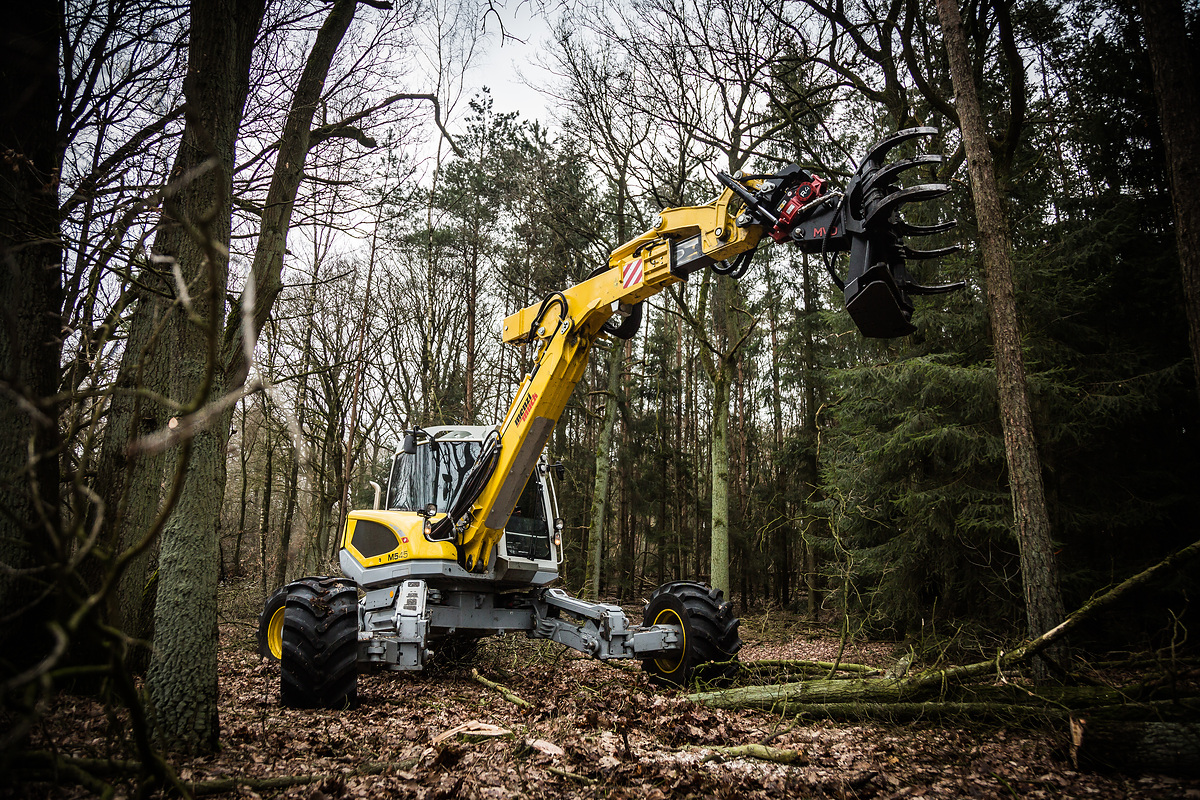
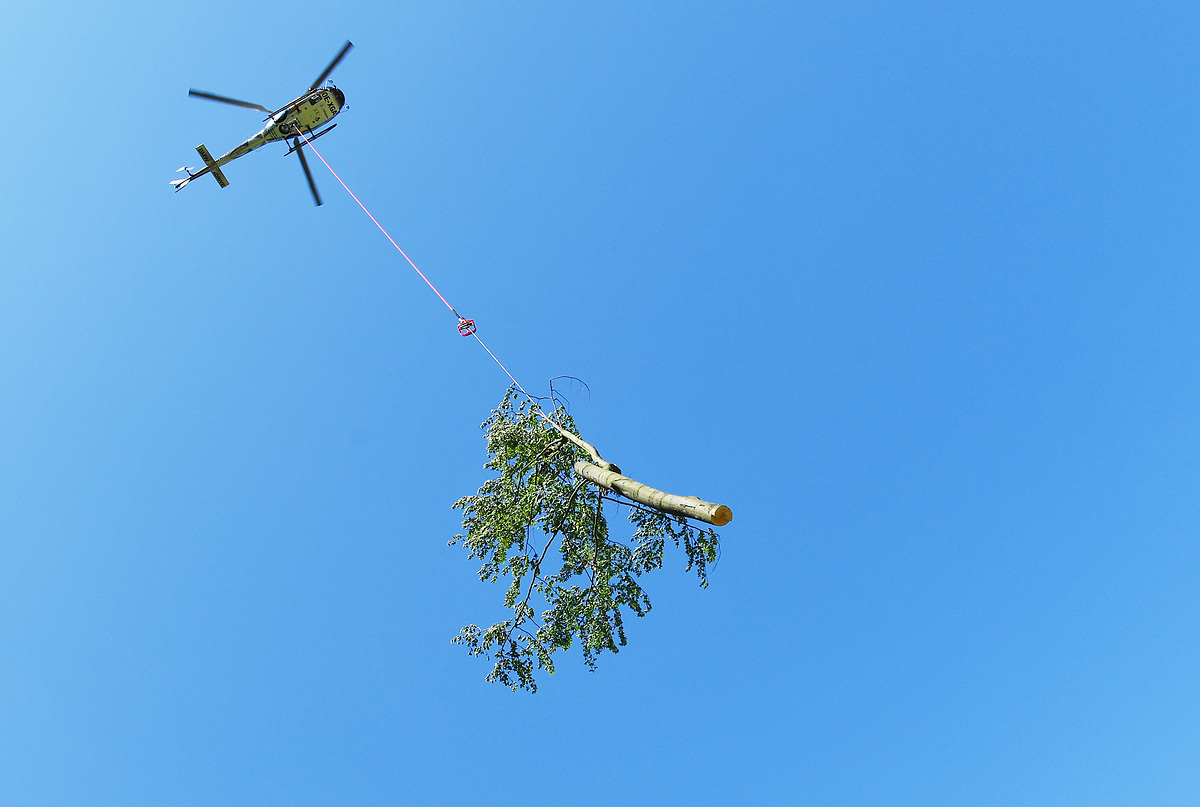
DB deploys the right equipment for every situation: From a spider excavator weighing 12 metric tons, which is particularly suitable for working on steep slopes and rough terrain, to helicopters and flying saws for aerial pruning and remote-controlled mulchers.
Innovative mix of measures for more sustainability
DB also prevents uncontrolled plant growth within the track area itself. This is because the roots of plants tend to loose the track bed and thus endanger its stability. Since 2023, DB has eliminated glyphosate use in Germany, opting instead for sustainable vegetation management with a mix of measures.
One important tool is targeted chemical vegetation control using pelargonic acid. This naturally derived active ingredient of natural origin is readily biodegradable and harmless to bees. It only acts where applied: treated leaves die, but the roots remain intact. Pelargonic acid was officially approved in February 2023 following consultation with environmental associations.
In addition, DB is developing alternatives to chemical vegetation control, including digital tools and new mechanical-manual methods like semi-autonomous mowing crawlers. DB works closely with other European railways, though these solutions are not ready for regular railway use yet.
Semi-autonomous mowing crawler
A narrow, remote-controlled mower equipped with sensors to maintain a sufficient distance from the track. Ideal for clearing trackside paths efficiently.
Ballast brush
A rotating brush attachment that removes and cleans ballast in the track bed to reduce plant growth.
Electro weeding
A thermal method where current flows through plants on contact, heating the water inside until the plant and its root begins to wither. Especially effective for invasive species that spread rapidly.
AI-based plant detection
DB has developed the Digital Vegetation Management System (DVM) for efficient and legally certainty planning. A key component is AI-powered vegetation monitoring: cameras film track sections and an algorithm identifies vegetation growth in the ballast area. This helps prioritize and select the most suitable removal method.
For its AI solution BiGEye ("Vegetation in the Track"), DB received the 2023 AI Innovation Award from the German AI Association and the F.A.Z. Institute.
Well prepared against invasive species
Employee health and safety are also top priorities. DB ensures staff are properly equipped when dealing with invasive species such as giant hogweed, Japanese knotweed, or ragweed. These non-native species spread rapidly and can harm infrastructure, ecosystems, or even human health. Colleagues in the field are trained in the risks and the proper handling of each species.
 Go
Go