
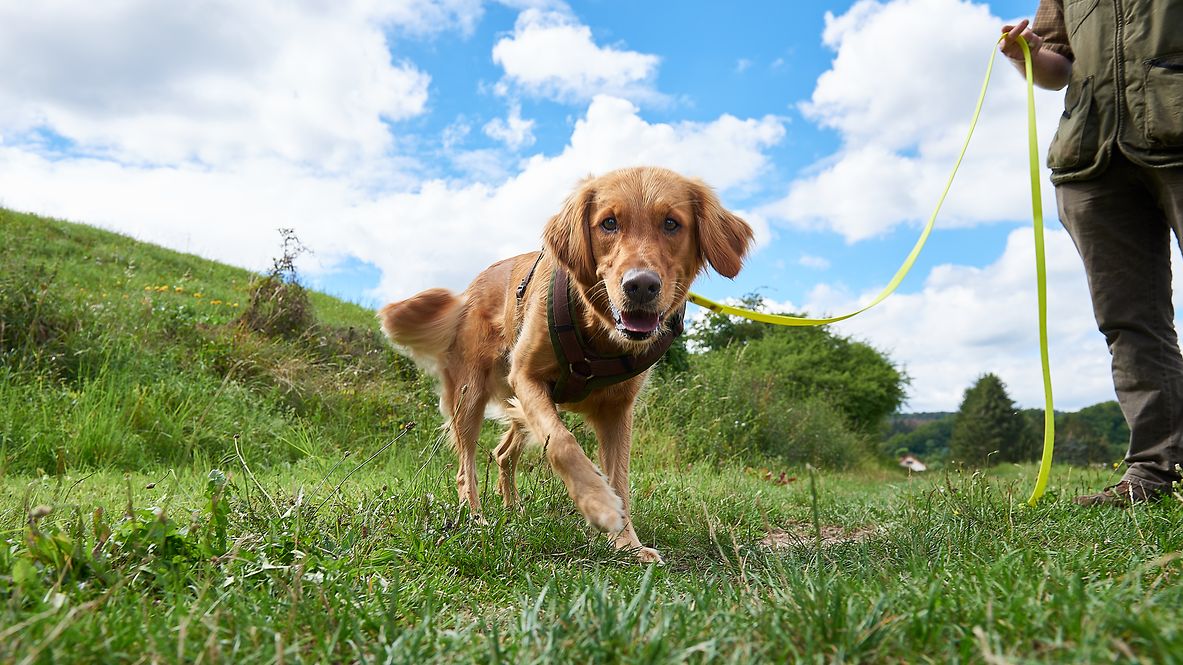
When Deutsche Bahn has to intervene in nature during construction projects, affected animals are relocated. In addition to traditional surveying methods, DB also rely on the support of certified species detection dogs.
Reliable four-legged colleagues
Species protection plays an important role in DB’s construction projects. Before construction begins, a site surve — called species mapping — is conducted. This determines whether protected animals live on-site and whether appropriate protective measures need to be taken. Typically, DB specialists walk the area and look for animal residents such as lizards and bats. However, human eyesight is limited. Structures can be complex, and vegetation dense. Many animals are also inactive at certain times of day or year.
This is where DB’s species detection dogs come in. They are trained to reliably sniff out different animal species — even when the animals are not visible. For example, a detection dog can locate lizards’ winter habitats even in freezing temperatures. A climate chamber is used to test how reliably the dogs work under different weather conditions.
Special training for dog and handler
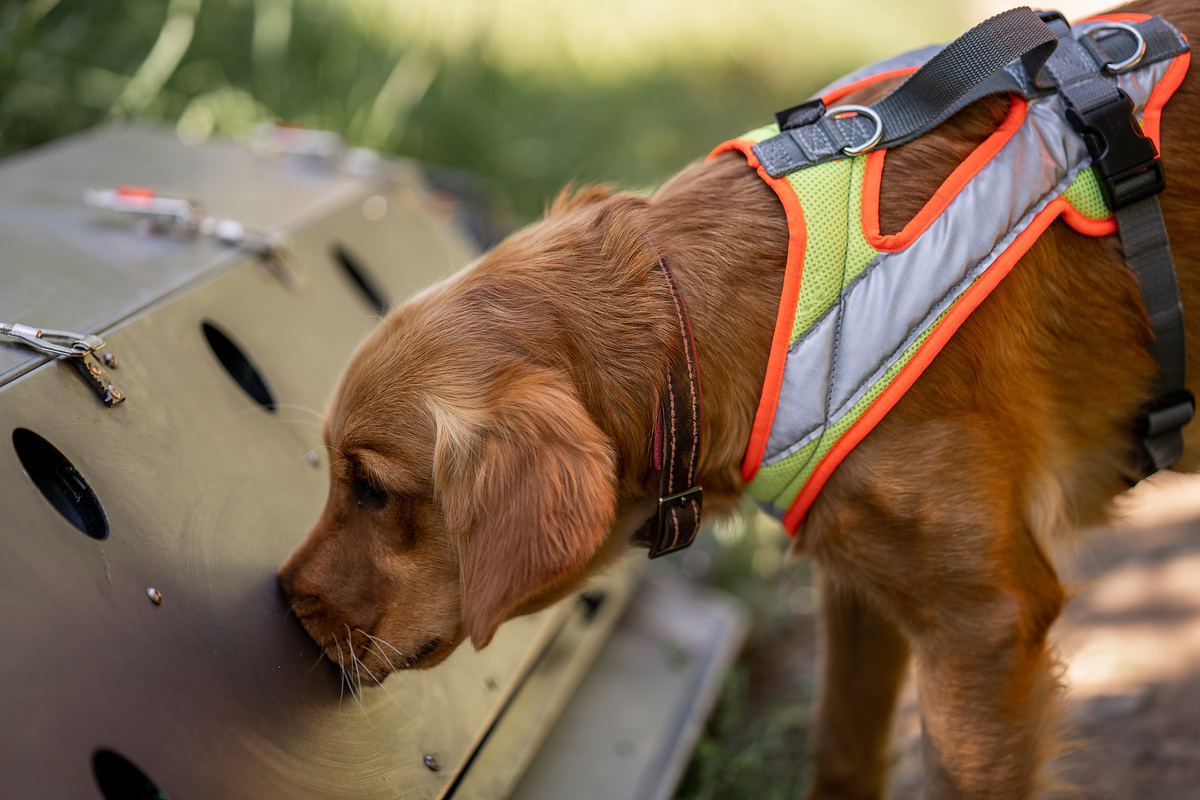
DB’s species detection dogs undergo specialized training. Using a “scent box,” they learn to recognize the odor traces of lizards, grass snakes, and other species. Their handlers are also trained—in the biology of target species and in surveying without a dog. Training lasts about twelve months and concludes with both theoretical and practical exams, qualifying both human and dog for surveying work. Since the project began in 2021, 19 dogs have been trained (as of the end of 2025).
On-site as a team
During training, the dog and handler form a team. Together they assist ongoing construction projects with species mapping. For example, during the planned construction of the new ICE maintenance facility in Dortmund, they searched for bats, wall lizards, yellow-bellied toads, and grass snakes. The dogs and handlers covered the 25-hectare site over three days. They were also deployed during the construction of the new S-Bahn core route in Munich.
Digital species mapping
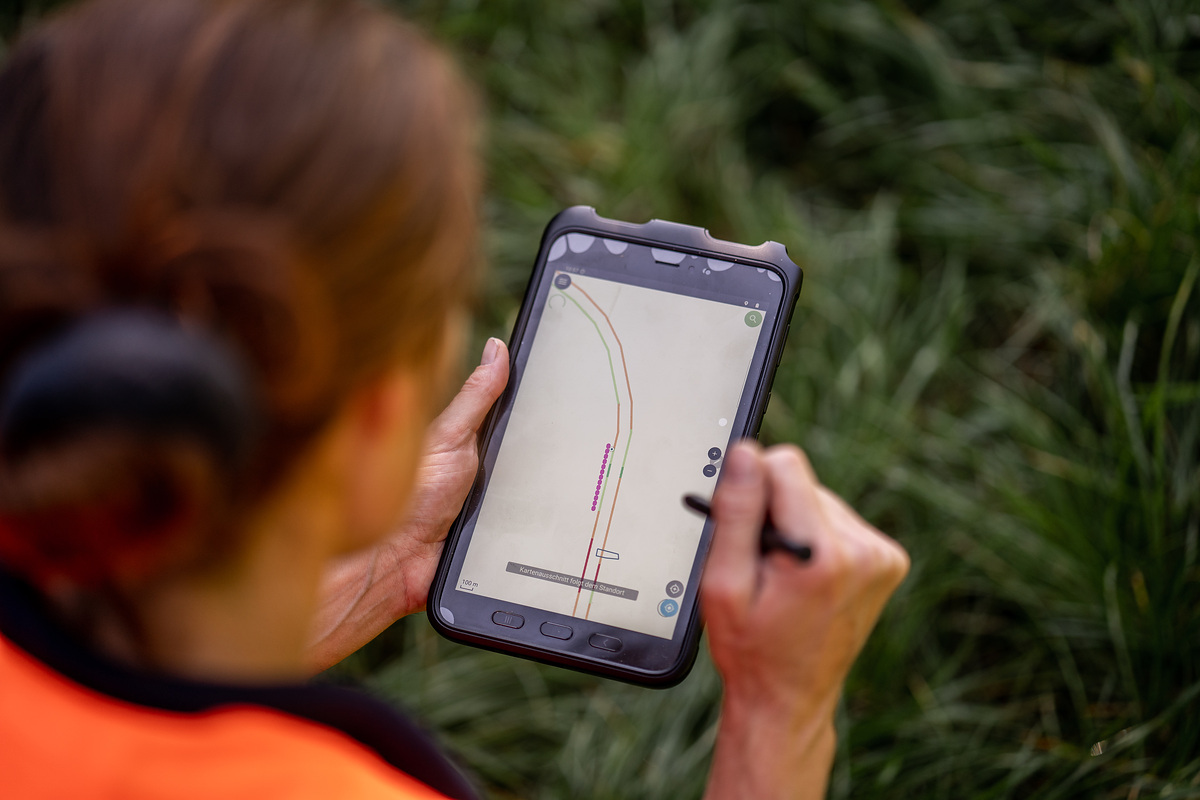
With their keen noses, detection dogs find what human eyes often miss. They work quickly, accurately, and almost independently of weather and animal activity. They perfectly complement traditional surveying methods. Surveyors record each find with coordinates on a tablet, saving them in a database. This ensures that the location of animals is tracked and that species can be relocated before construction begins.



 Go
Go