
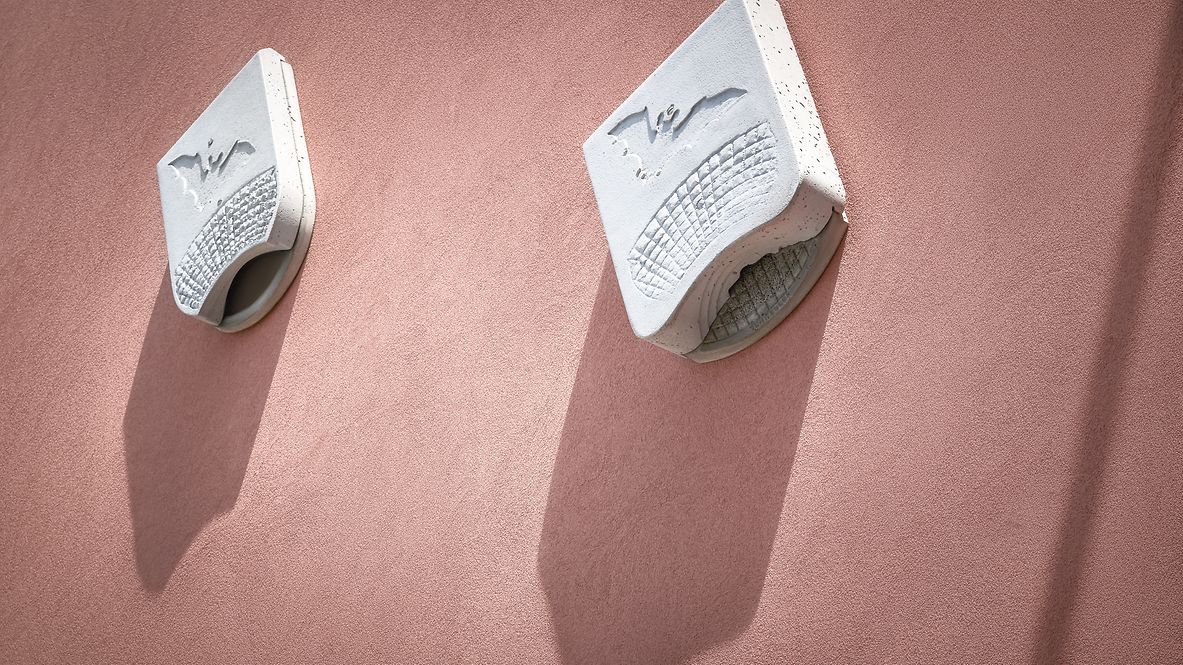
Bats are often among the animal co-tenants of Deutsche Bahn. The winged creatures frequently take up residence in old buildings, underpasses, and tunnels. All of Germany's bat species have been protected by law for many years. For this reason, Deutsche Bahn provides bats with new homes before starting construction at their previous locations.
Hotel for the barbastelle bats
New life has been created, for example, at the old brickworks in Ducherow, Mecklenburg-Vorpommern. The brickworks were converted into a hotel for for the protected species of barbastelle bats. Flight holes were drilled into the arches, and partition walls of brickwork were installed to create suitable habitats.
A new home in old tunnels and railroad facilities
The 900-meter long Schwarzkopf tunnel between Laufach and Heigenbrücken was filled with excavation material from a new tunnel, and special flight holes were added for bats. Similarly, the Kaiserbahnhof in Potsdam and the Norddeich-Mole station in Lower Saxony were adapted to provide homes for bats.
Bats also live along railway lines in Upper Lusatia. For the modernization of the Knappenrode–Horka line, DB converted several old military structures — including bunkers and three watchtowers — to make them bat-friendly. The first guests are already using the bunkers as winter quarters. The watchtowers are likely to be popular with larger groups of bats as well. Here, the animals can gather for for courtship and mating and can raise their offspring undisturbed.
Even when DB dismantles old railroad facilities, suitable alternative habitats must be found nearby for resident animal species. In Schleswig-Holstein, for example, Deutsche Bahn has created new habitats for bats to compensate for the loss of a bat roost during the dismantling of a signal box in Risum-Lindholm. Ten bat boxes were installed on a neighboring signal box, which was deliberately not demolished but preserved specifically for this species conservation measure. In addition, the animals can use the attic there as a new home thanks to two newly created entry points, where 15 bat boxes were also installed.
Shelter in the trees
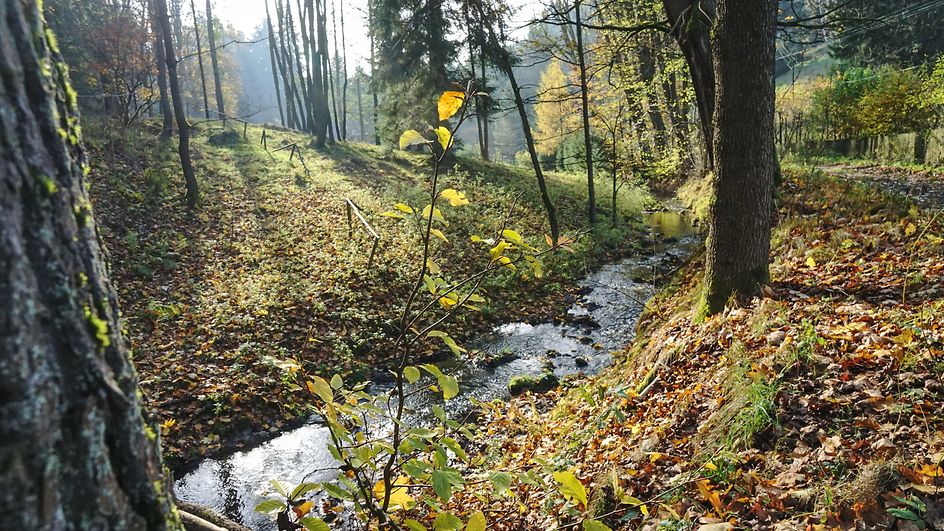
Along the Wendlingen–Ulm new line, DB has also created bat habitats in surrounding forest areas. Trees with minor pre-existing damage, such as broken branches or holes in the bark, were removed from forestry use. Forest-dwelling bats, like the greater noctule and the greater mouse-eared bat, often hide in old tree crevices and knotholes during the day. In order to secure the trees permanently for conservation and to prevent their felling, they were specially marked, allowing them to develop into suitable bat habitats despite or precisely because of their imperfections.
In case of lightning strike or storm damage, replacement habitats are provided to ensure that the resident bat species continue to have safe living spaces.
 Go
Go