
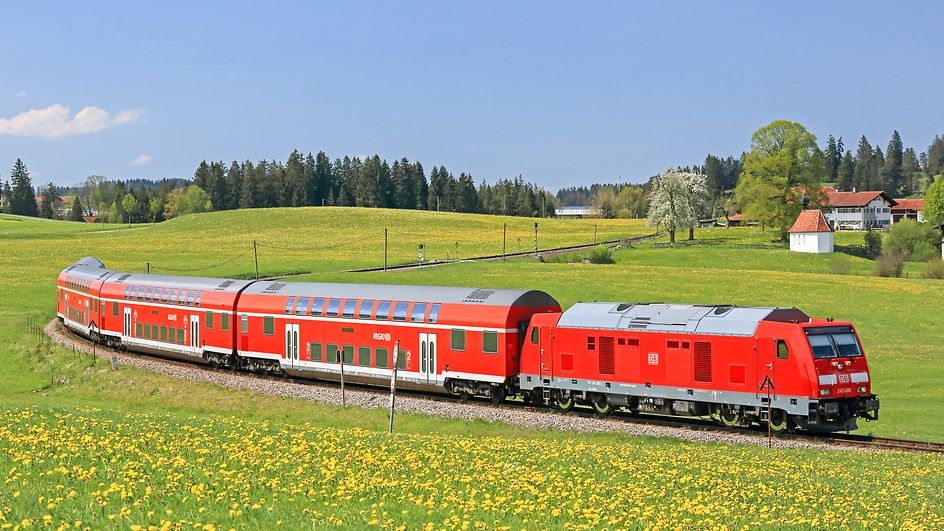
Deutsche Bahn has committed to reducing its greenhouse gas emissions across the entire value chain to net zero by 2040. An important lever in this effort is the further electrification of the rail network. However, there will be still routes in the future on which goods and passengers cannot always be transported to their destination electrically due to geographical or operational characteristics. In these cases, DB relies on a technology-neutral approach with alternative drives and fuels as a replacement for fossil diesel.
Virtual test run for alternative drives
To select the most efficient and climate-friendly drive system when tendering and procuring vehicles, DB uses an internally developed simulation tool. Whether battery-electric drives or systems with hydrogen and HVO biofuel, the DB Eco Rail Simulator models all alternative drive variants and hybrid systems in a simulation.
-
more than 200 vehicle parameters form the data basis for the DB Eco Rail Simulator
The tool is fed with a wide variety of data, including more than 200 vehicle-specific parameters collected from manufacturers, as well as timetable and route parameters, such as curves and elevation profiles, which affect driving dynamics. This data allows the creation of so-called digital twins, accurately reproducing train operations by linking all relevant information.
A digital twin is a detailed digital representation of a real object, environment, or process. These twins behave in the simulation exactly as their real-world counterparts do. Using the DB Eco Rail Simulator, it can be verified whether the respective drive system is correctly designed for operation on a given route. This allows, for example, calculations of whether the battery size is sufficient for the train to reach the next recharging point even at -10°C outside temperature, with a full complement of passengers and a tight driving style. This is important for planning, as the significantly shorter range and more complex charging processes compared to fossil diesel are still the biggest challenges when switching to climate-friendly alternative drive systems.
Next stop: diesel phase-out
The DB Eco Rail Simulator can precisely calculate, for example, how many hydrogen stations are needed along a route or where overhead line charging island systems (OLIAs) for recharging battery trains must be installed. It also models current and future weather conditions that can significantly impact energy consumption or battery state. A connection to the German Weather Service database was implemented so local climate data automatically feeds into the simulation. This allows DB to make its operations more climate-resilient and avoid follow-up costs. Additionally, an ageing simulation calculates the lifespan of individual components, helping estimate when batteries or fuel cells need replacement. Operational problems can thus be detected early and avoided, supporting the successful diesel phase-out at DB.
Consulting competence for more climate protection
Insights from the simulations also strengthen DB’s consulting expertise. The Eco Rail Simulator supports tenders, such as when DB Regio applies to be the operator of a vehicle fleet for a transit authority. The tool helps calculate customized, economically viable operational concepts for the required drive system. When tenders are technology-neutral, it assists DB in offering the best alternative to fossil diesel. Independent verification builds acceptance and trust with transport authorities — an important prerequisite for ordering climate-friendly trains in the first place.
Simulation for lighthouse project in the Palatinate
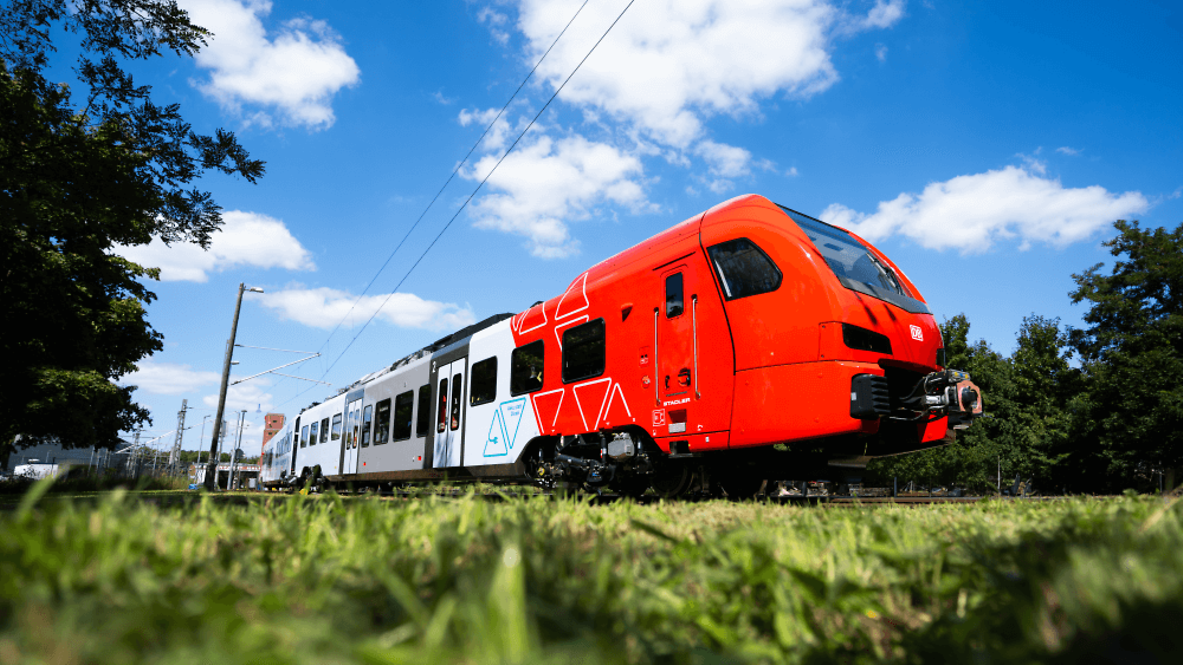
In the Palatinate network, DB Regio was awarded the operation of a new fleet of battery-powered trains. Before the trains entered service, the DB Eco Rail Simulator was used to thoroughly test operational feasibility and vehicle configuration. Additionally, battery lifespan, nighttime charging processes, and various expansion stages of the Palatinate network were simulated and optimized. Starting in December 2025, the battery-electric hybrid vehicles will be gradually put into operation.

 Go
Go