
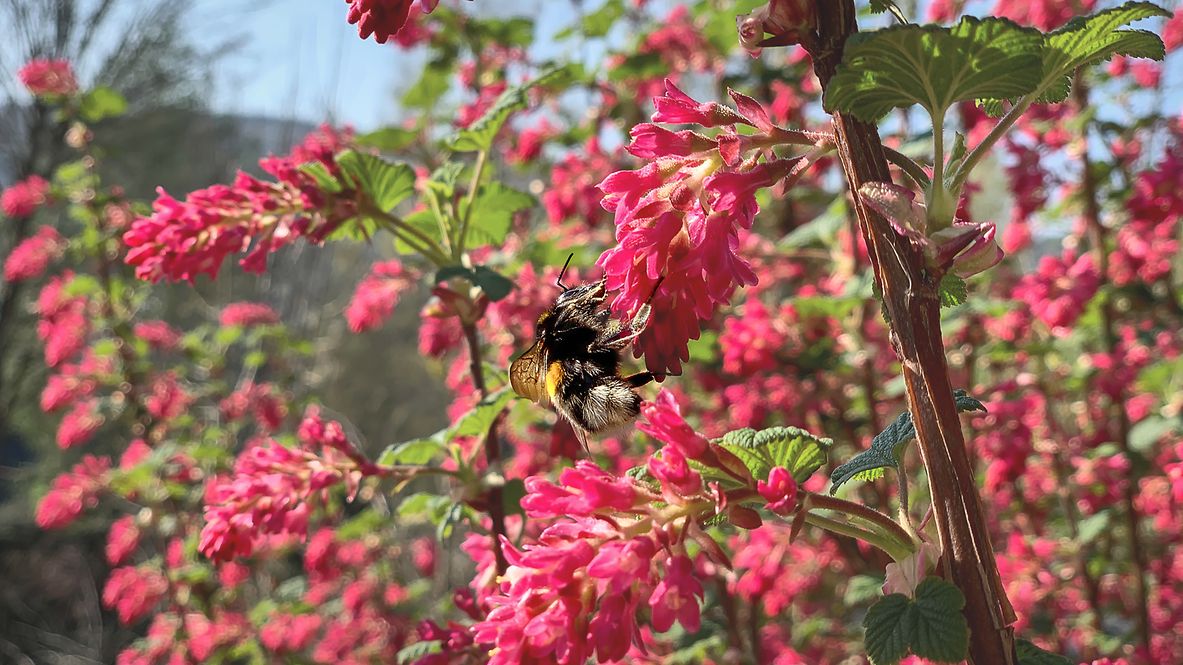

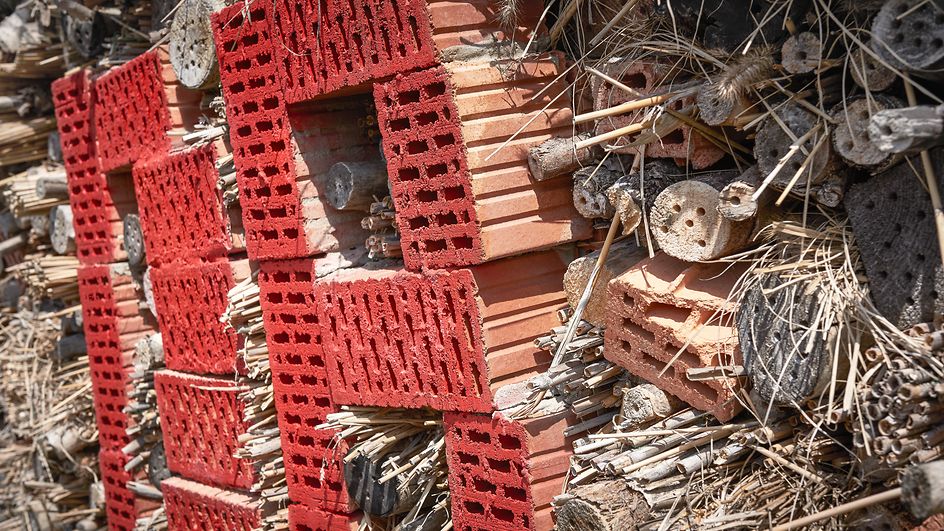
Deutsche Bahn has been committed to nature and wildlife conservation for many years. Across Germany, the company transforms as many of its sites as possible into biotopes, providing year-round food and shelter for endangered species such as bees, bumblebees, and butterflies. As part of voluntary initiatives, DB sets the course for sustainable management of its properties. Flowering meadows are sown, native and climate-resilient shrubs and trees are planted, and wild corners are created as nesting opportunities for wild bees. Together with dedicated employees, DB thus creates new and valuable habitats.
Beacons for more biodiversity
At the signal box site in Delmenhorst, for example, DB created a special biotope on 5,000 square meters. The old gravel area was refurbished with recycled play sand and transformed into a nutrient-poor meadow, a habitat that is now rare in today’s landscape. The drier and poorer in nutrients these areas are, the more likely species like grasshoppers and rare plants will settle there. On the disused tracks, more than 300 native trees and shrubs were planted, and deadwood hedges and bat boxes were installed.
The site was planned and implemented by DB employees in cooperation with a landscape architecture office from Bremen. Additional support came from NABU Delmenhorst, the Society for the Promotion of Regenerative Microorganisms, and the Nature Garden Association.
In another project, a wildflower meadow was sown at the vehicle maintenance plant in Nuremberg. At the Kaiserbahnhof Potsdam, a gravel turf covering approximately 1,000 square meters was created.
Preserving existing biotopes
New biotopes are not always necessary. As a landowner, Deutsche Bahn also possesses sites where valuable biotopes already exist and need to be preserved. For example, in Niesky, rare and protected orchids such as the spotted orchid, the broad-leaved orchid, and the large two-leaved orchid bloom on over 1,000 square meters. DB track services employees maintain the species-rich meadow on behalf of DB Immobilien by mowing it twice a year. In summer, up to 20 percent of the area with orchids is left unmown, ensuring the plants can reproduce. Numerous insects, such as grasshoppers, also find shelter in the unmown sections. The cuttings are removed to prevent nutrient accumulation, preserving the valuable character of the meadow.


 Go
Go