
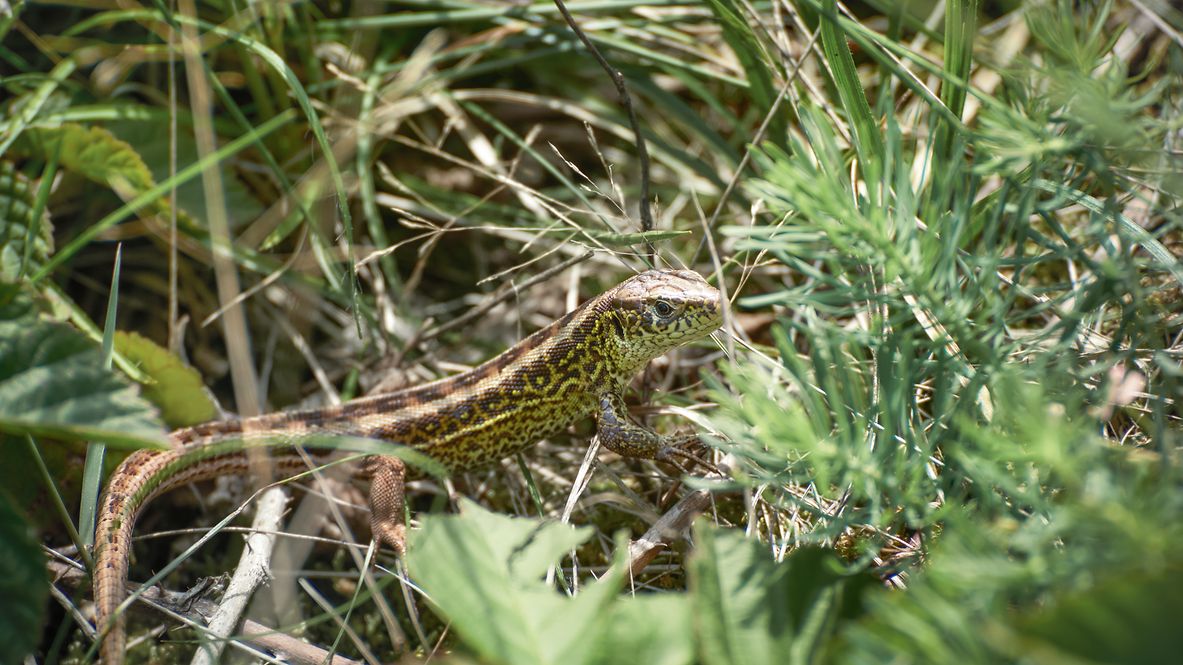
During construction and renovation of railway infrastructure, impacts on nature cannot always be avoided. Since lizards often find suitable habitats along railway embankments, they are relocated if needed.
Lizard area in Landschaftspark Herzberge
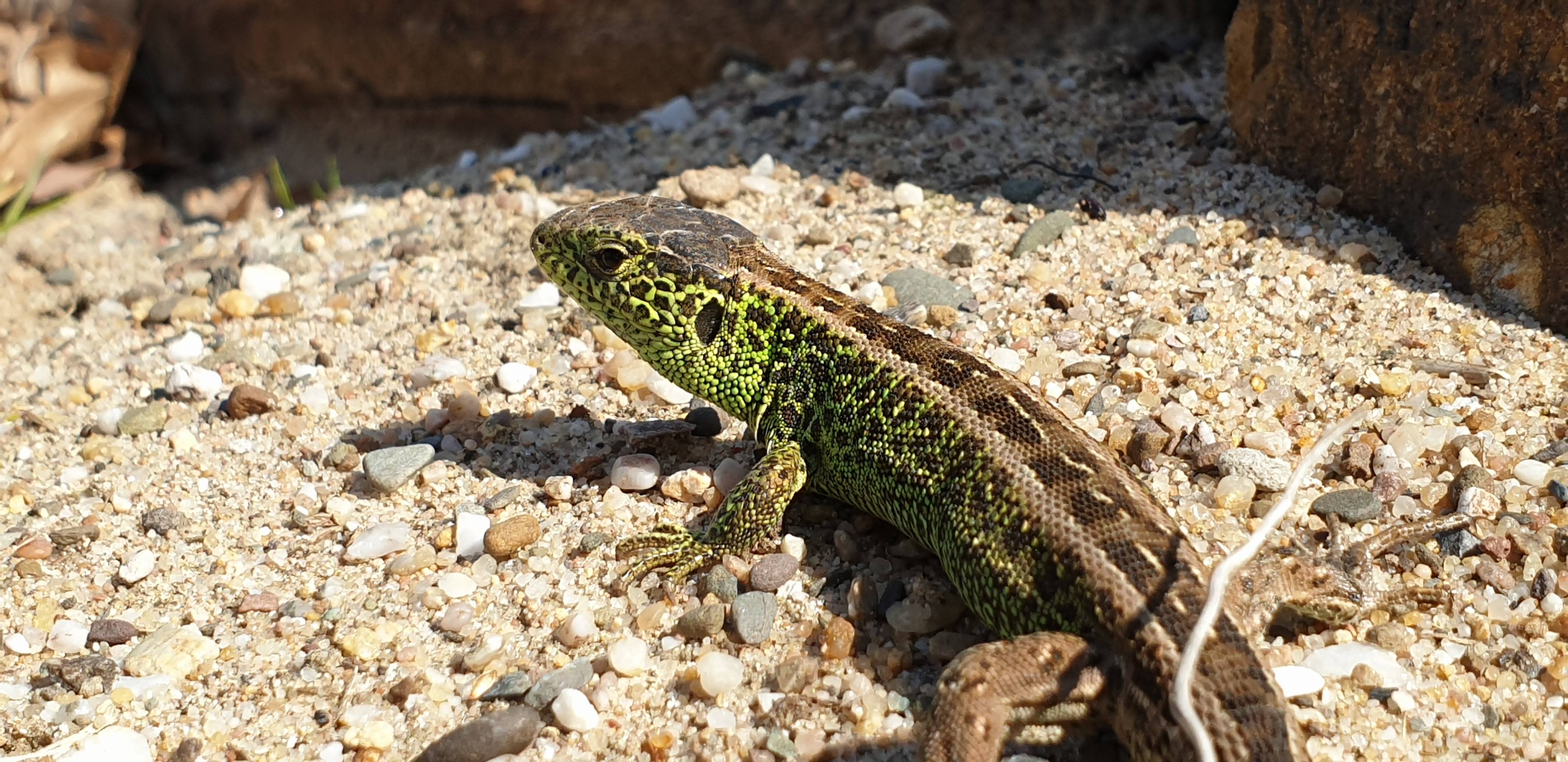
Numerous protected sand lizards were relocated from the site of the former classification yard and maintenance depot in Berlin-Schöneweide. A new commercial area was developed on the approximately 40-hectare site. The lizards have found a new home, among other places, in Landschaftspark Herzberge.
Temporary habitats for large construction projects
In the Stuttgart–Ulm major project, around 100 sand lizards were relocated to old vineyards along the nearby river Murr or to temporary alternative sites. In addition, DB relocated thousands of wall lizards from the former Stuttgart-Untertürkheim freight yard to the nearby Feuerbacher Heide, where numerous stone walls were built to provide new homes for the animals.
New habitats in Cologne-Zollstock
In Cologne-Nippes, where the first climate-friendly ICE maintenance depot is operated, around 150 protected sand lizards were relocated before construction began. They now inhabit a roughly 17,000-square-meter area in nearby Cologne-Zollstock.
Replacement habitats in Upper Lusatia
As part of the modernization of the Knappenrode–Horka line in Upper Lusatia, DB provided new shelters for approximately 3,500 lizards and created nearly 45 replacement habitats for sand lizards and smooth snakes. All animals were professionally resettled by reptile experts.
Relocation at the Leverkusen S-Bahn station
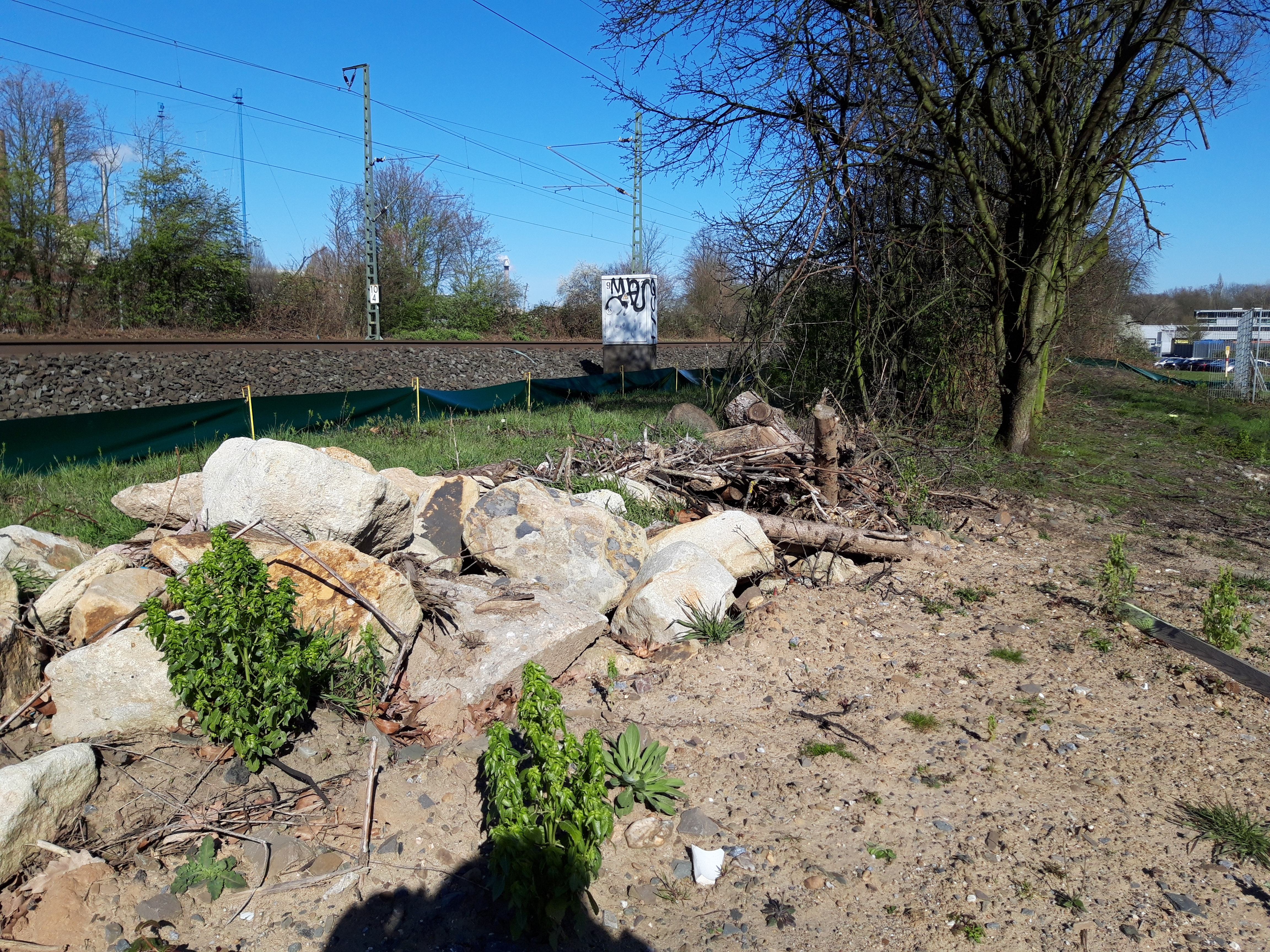
Due to construction work between the Leverkusen-Rheinsdorf and Langenfeld S-Bahn stations, Deutsche Bahn has relocated more than 400 sand lizards and around 100 common wall lizards. Species-appropriate habitats with gravel, sand and dead wood were created close to the rail line. The sand lizards have found a new home here. The common wall lizards were relocated to a nearby common wall lizard population. However, Langenfeld and Leverkusen are only the first sections of the Rhine-Ruhr Express line extension, which is around 100 kilometers long. Further lizard habitats have also been created in Bochum, for example.
Research project for improved reptile protection
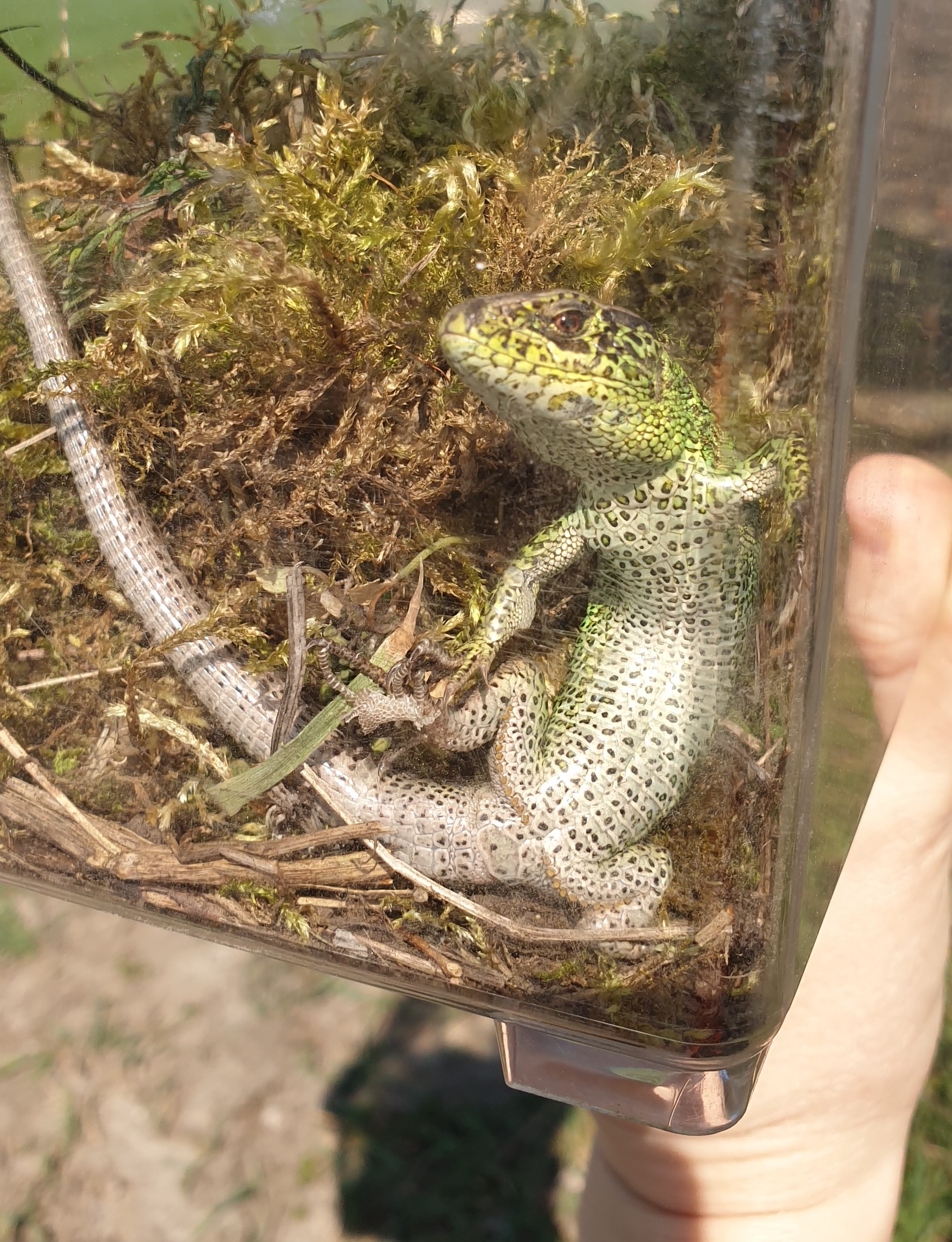
In a study conducted with the Museum of Natural History Berlin, DB fitted around 80 lizards with telemetry transmitters and monitored them for one year. Analysis of the movement data revealed when and where the animals are active along the tracks and the size of their territories. For example, lizards like to warm up on stones of the track ballast in the mornings. Railway operations do not endanger them, and crossing the tracks is rare and not dangerous. Between late July and early August, some sand lizards were observed leaving the habitat on the track they had previously occupied and moving up to 100 meters into the adjacent forest or to the edge of the forest. These findings help DB protect small reptiles even better during upcoming construction projects.
 Go
Go