

Transporting goods and passengers by rail is not noise-free. That is why Deutsche Bahn, together with the federal government, aims to reduce the impact of rail noise on nearby residents. To gain new insights for local noise mitigation, DB participates in various research projects and tests innovative noise-reducing technologies.
Noise Barrier with a View
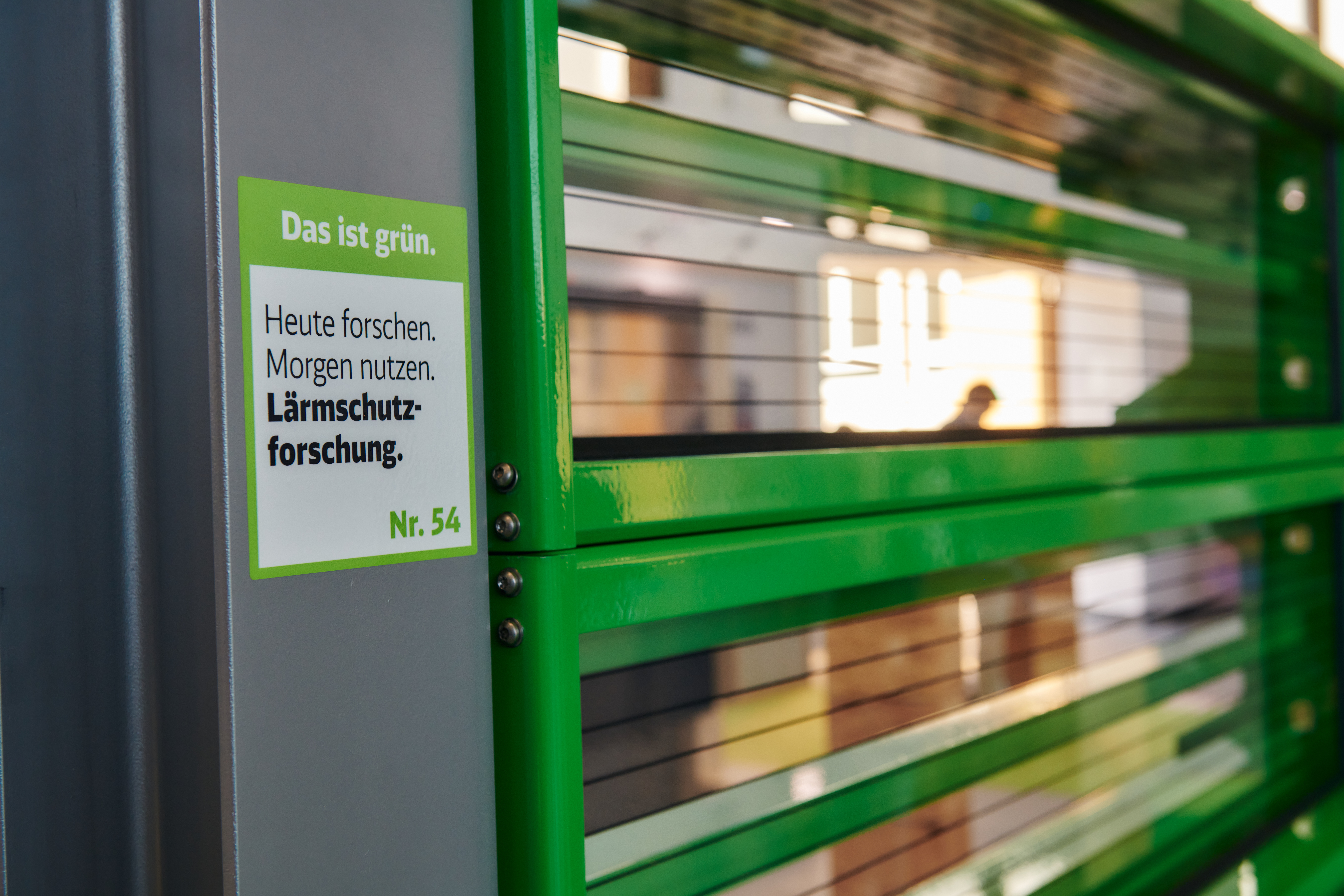
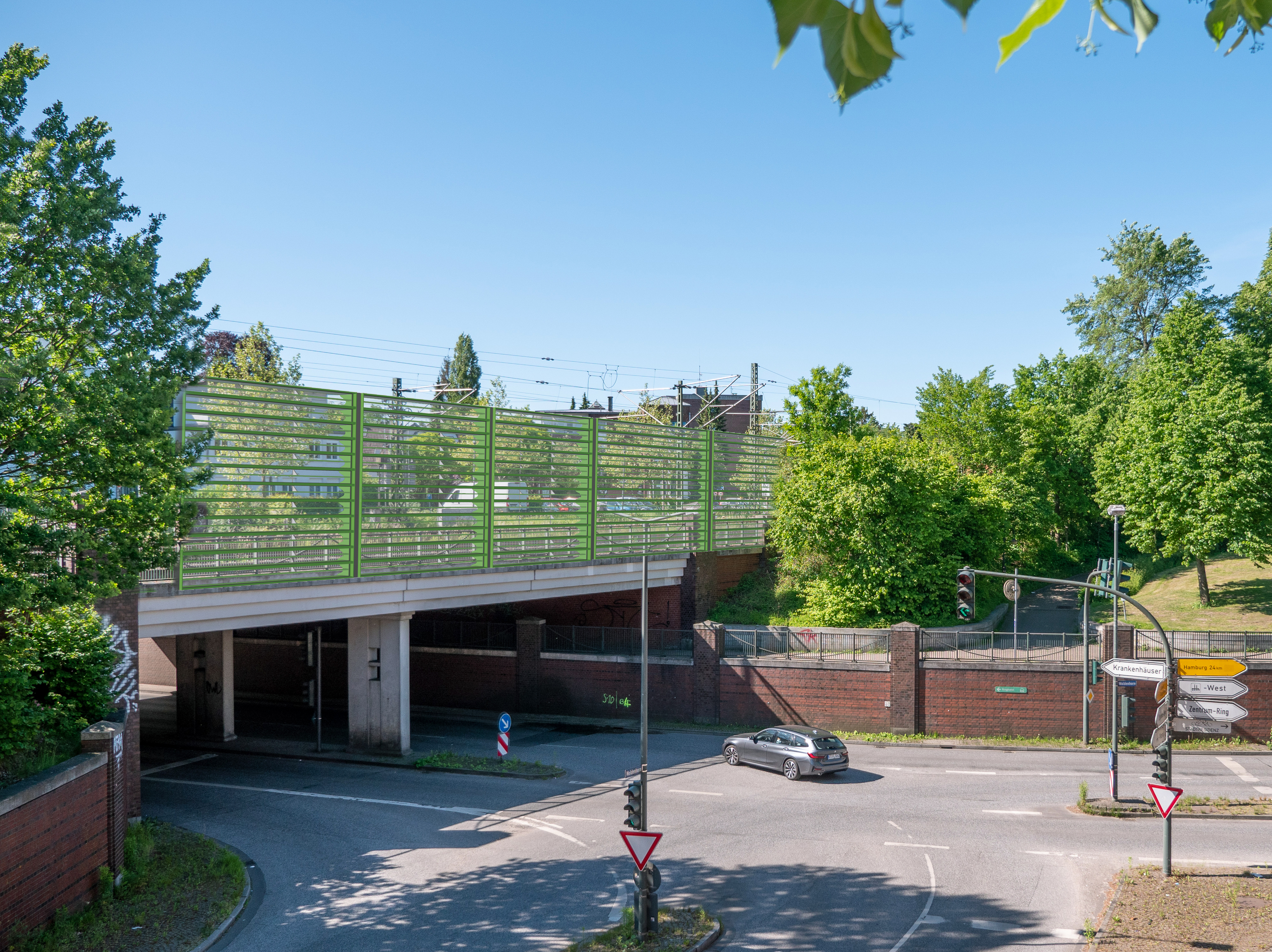
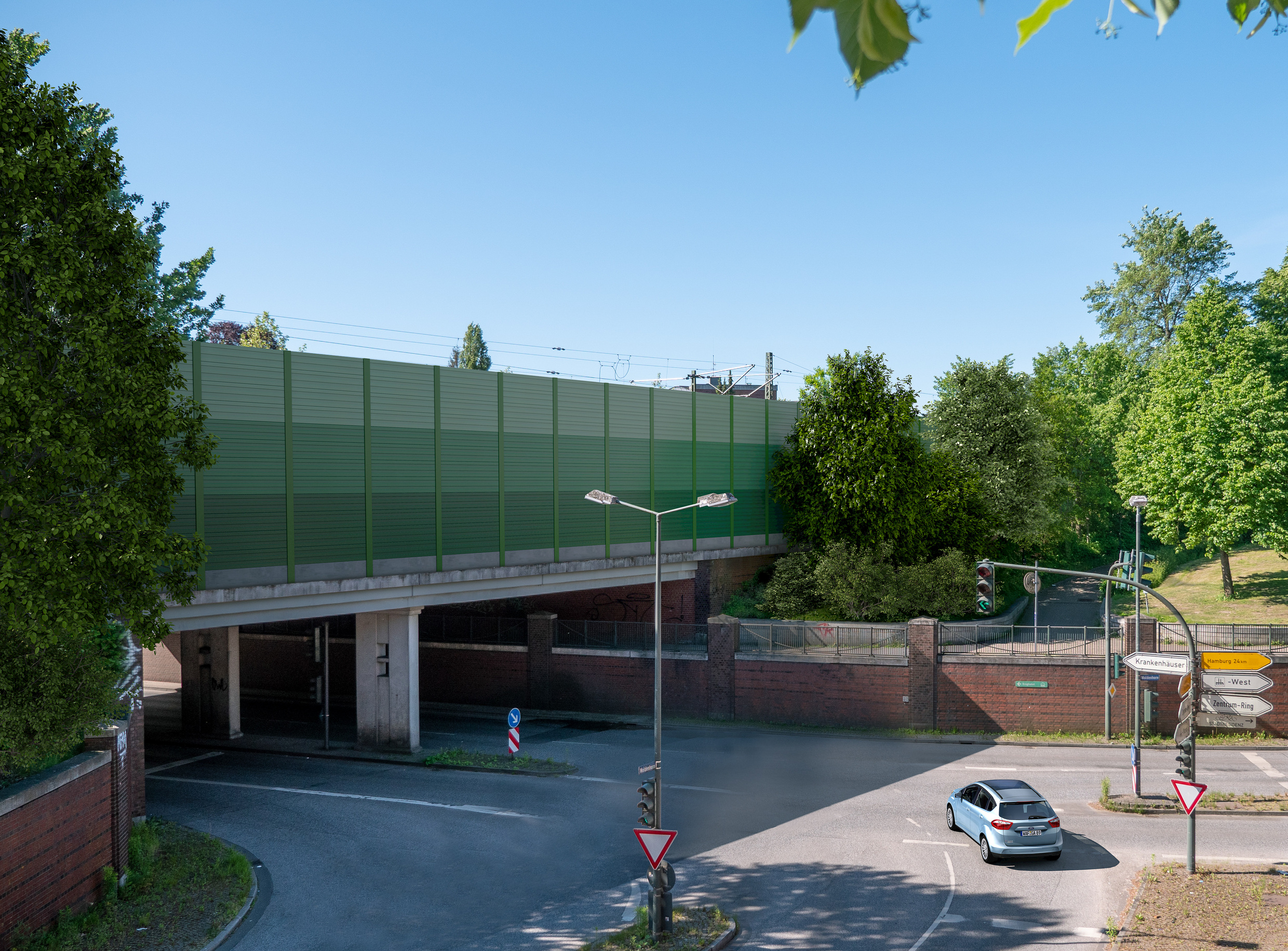
Conventional noise barriers are visually prominent and do not fit everywhere into the urban landscape. Therefore, DB Bahnbau Gruppe, in collaboration with the start-up Phononic Vibes, developed an innovative solution. The so-called MetaWindow is a transparent noise barrier made of Plexiglas modules that visually blends into the environment while offering sound-absorbing properties comparable to conventional non-transparent walls. The MetaWindow is being trialed for the first time on the S4 project line in Hamburg. If it proves effective in everyday operations, more transparent noise barriers could be deployed in the future.
The following visualization shows how the MetaWindow integrates into the urban landscape.
EU Research Programs: Shift2Rail and Europe’s Rail
The European Shift2Rail program aimed to develop new technologies and solutions for rail transport. DB, together with other European railways, companies, and research institutes, actively participated in developing and acoustically evaluating innovative technologies and methods for noise reduction. This included, for example, virtual reality software that allows different noise mitigation measures to be experienced and compared audiovisually. Methods were also developed to better calculate and identify individual noise sources, enabling quieter rail vehicles in the future. In the Rail4Earth project of the follow-up program Europe’s Rail, the effectiveness of vibration-reducing measures is currently being studied.
Noise Protection Technologies in Practical Testing
In 2016, Deutsche Bahn, together with the Federal Ministry of Transport, launched the “Initiative for Practical Noise Protection Testing” (I-LENA). By 2020, around 30 of over 60 submitted ideas for innovative noise protection technologies were selected and tested under real-life conditions. These included new types of noise barriers, improved rail grinding and damping, as well as technologies to reduce curve squeal, bridge vibrations, and construction noise. I-LENA aimed to promote exceptional concepts and accelerate the development of market-ready, practical noise protection products.
Innovative Freight Cars for Less Noise
Within the “Innovative Freight Car” research project of the Federal Ministry of Transport, Deutsche Bahn successfully tested technologies to make freight cars quieter and more energy-efficient. The vehicles were trialed across Europe, covering around 150,000 test kilometers.
The innovative wheelsets with absorber rings tested in the project were successfully further developed with the manufacturer and subjected to further operational testing. This showed that the required operational capability was met, but the expected effectiveness in practical application could not be proven. This measure will therefore not be implemented.
 Go
Go