
In order to reduce emissions from the construction and operation of rail infrastructure, Deutsche Bahn wants to make greater use of low-emission building materials. Among other things, DB is focusing on climate-friendly processes in steel production, the use of recycled materials and the testing of new eco-concretes and binding agents.
Emission-reduced steel from the electric arc furnace
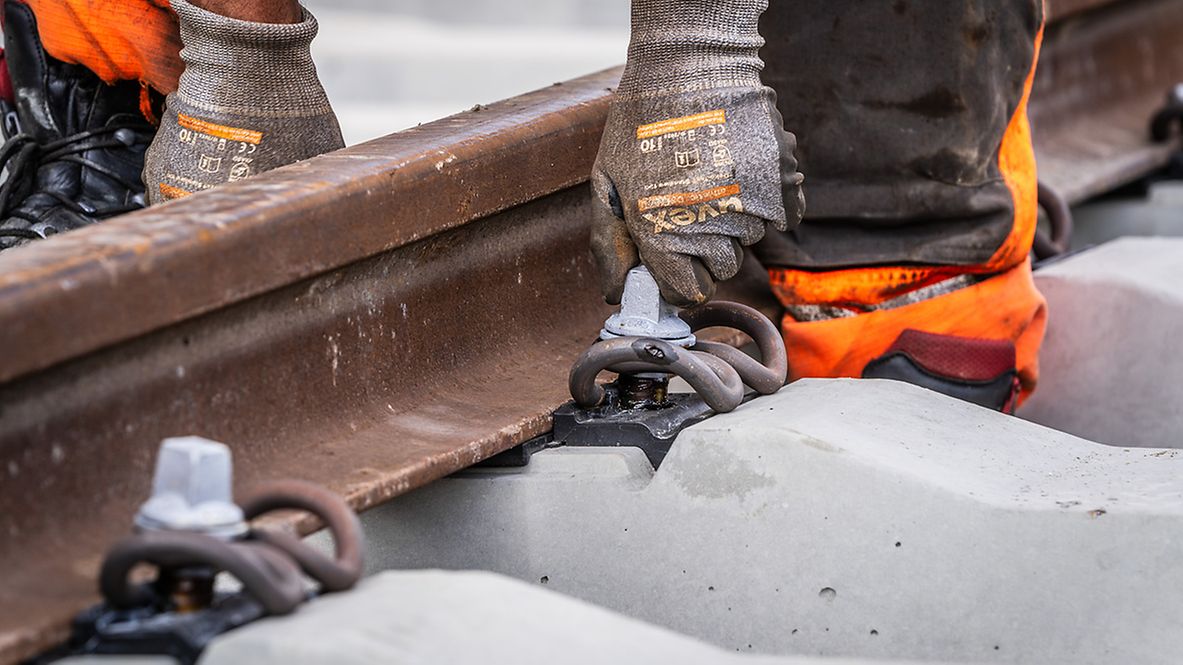
Steel production is one of the most energy-intensive industries in the world - at the same time, steel is an indispensable material for the construction of rails, switches, bridges and catenary support poles. This is why DB relies on innovative manufacturing processes, among other things, and concluded a supply contract with Saarstahl Rail for around 1,000 tons of climate-friendly rails at the end of 2025.
The low-emission steel from Saarstahl Rail is produced at the Saarstahl Ascoval plant in France. The plant does not produce using the traditional blast furnace route using iron ore and coal, but instead relies on so-called electric arc furnace (EAF) technology. In contrast to conventional steel production, this technology uses almost exclusively steel scrap, thus avoiding the use of primary raw materials. Compared to rails produced in traditional blast furnaces, electric arc furnaces produce up to 70 percent less CO2e emissions.
How steel production in an electric arc furnace works
In EAF technology, steel is not "remelted" from iron ore, but is mainly produced from steel scrap. Large electrodes generate a strong electric arc that reaches temperatures of over 3,000 degrees Celsius. This heat causes the scrap to cast. In contrast to the classic blast furnace route, no coke from coal is needed to remove oxygen from the iron ore and extract metallic iron from it. Instead, existing metallic iron in the form of steel scrap is used. The central energy source is electricity - ideally from renewable sources such as wind or hydropower. Depending on the electricity mix, a large proportion of direct emissions can be saved in this way. In addition, the use of steel scrap reduces the consumption of primary raw materials.
With the 1,000 tons of steel purchased, the CO2e savings amount to around 1,800 tons. The first rails were installed in North Rhine-Westphalia, Rhineland-Palatinate and Saarland.
From construction debris to recycled paving stones
Eco-paving stones are produced using innovative and environmentally friendly methods, which include the use of renewable energy and treated rainwater. Additionally, so-called concrete block chipping is used. Up to 40 percent of the material, which previously ended up in road construction, is recycled in the eco-paving stones that DB has been using since 2014. Several transport stations have already been paved with these recycled stones – for example, at Westfrankenbahn and the stations Weiterstadt, Laudenbach (Württ), and Sulzbach (Main).
Pilot project at Südkreuz: Testing climate-friendly eco-concretes
The high cement content in concrete is a major driver of greenhouse gas emissions in the construction of infrastructure facilities and buildings. Worldwide, billions of tons of concrete are produced each year. Cement clinker acts as a binding agent, fired at peak temperatures of 1,450 °C in rotary kilns. During this process, calcium carbonate from limestone is converted into calcium oxide and carbon dioxide. The main share of greenhouse gas emissions from conventional concrete production comes from this process. Around a third of CO2 emissions are caused by heating the kilns – often using coal and natural gas – and the remaining two-thirds from the chemical reaction.
-
10 square meters of innovative eco-concrete at Berlin Südkreuz station
To reduce emissions in future construction, DB InfraGO is testing new ecological concretes in a pilot project at Berlin Südkreuz station. These eco-concretes feature reduced clinker content, alternative materials, and energy-efficient production, producing up to 60% less CO2 compared to the industry average.
As part of the pilot project, nine floor coverings from six manufacturers were installed on an area of around ten square meters. The testing, which started in April 2025 and runs for twelve months, allows assessment under all weather conditions – from summer heat to winter frost – evaluating mechanical properties such as freeze – thaw resistance, abrasion resistance, slip resistance, and visual durability.
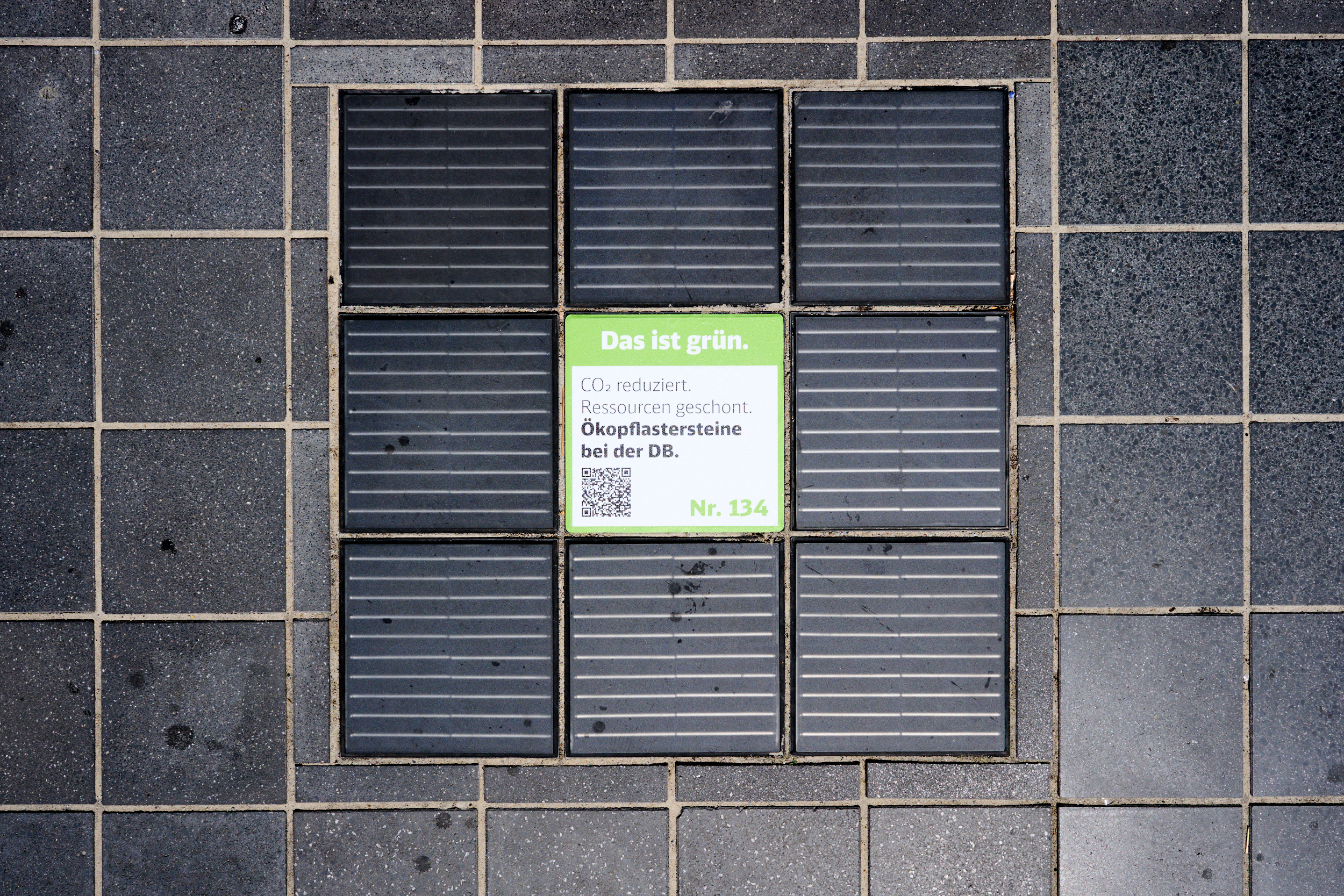
In addition to climate-optimized concretes, solar coverings are also laid out in the middle of the test area. A paving stone with a 25% recycled content, which is already used as standard at DB, is also installed as a reference surface.
Materials and methods in focus:
Alkali-activated binders
Alkali-activated binders (AABs) – so-called geopolymers – are alternative binders for producing cement-clinker-free materials. Examples include blast furnace slag, fly ash, or slag combined with an alkaline activation solution. Production of these materials generates significantly less CO2 than conventional cement.
The following pavement surfaces are being tested:
- RINN Klimastein
- KANN PROKLIMA
- Berding beClimate
- Kronimus stone with cement-free backing concrete
These pavements are characterized by high strength, chemical resistance, and durability.
Clinker-reduced cements
In addition to clinker alternatives, coverings with reduced clinker content were also installed. By using main components such as limestone, blast furnace slag, fly ash, and volcanic ash, CO2 emissions in production can be further reduced. Depending on composition, six cement classes (CEM I to VI) are distinguished, with CEM I corresponding to conventional Portland cement clinker.
In the pilot project, a CEM II pavement from Kronimus and Lithonplus is used. Both save around 40% CO2 compared to conventional industry mixes.
More innovative approaches
The KANN PROKLIMA Zero is a concrete block containing biochar, produced by heating biomass from residual and waste materials without oxygen. Its use improves material properties such as moisture regulation and thermal insulation and helps reduce the concrete’s carbon footprint.
The installed Platio solar covering offers two advantages: they are made of recycled plastic and include a solar cell that collects energy from the incident sunlight.
Through close collaboration with the manufacturers, DB aims to identify solutions that meet operational requirements while gaining experience to build platforms and station forecourts in an environmentally friendly way in the future.
 Go
Go