
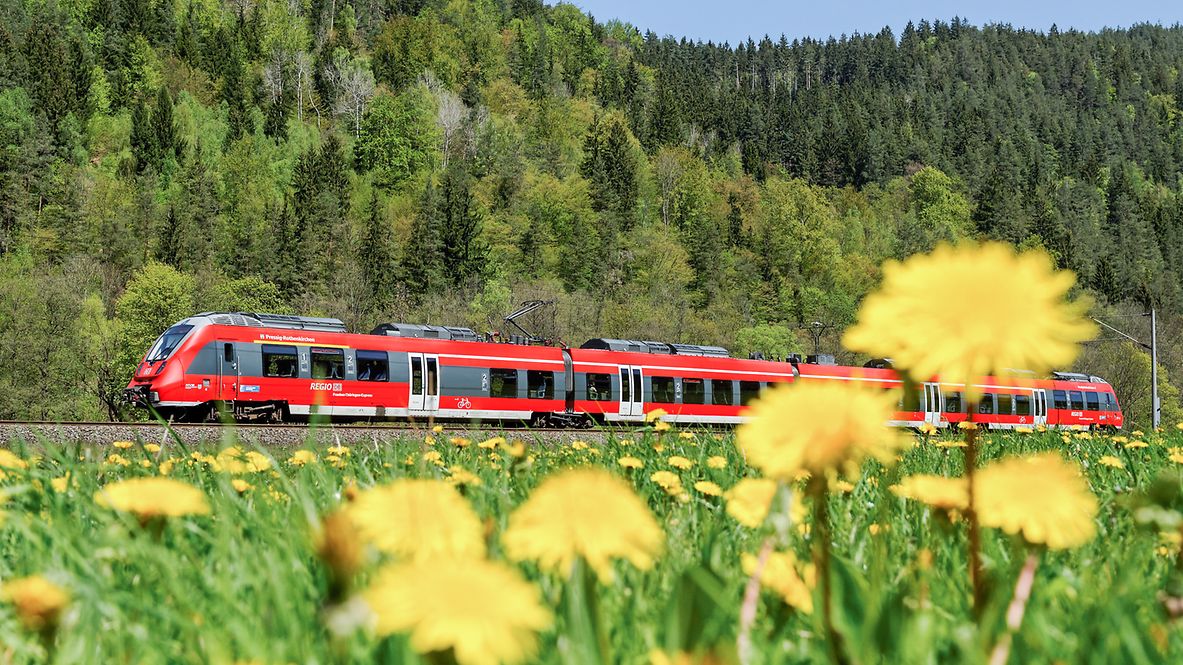

When Deutsche Bahn must intervene in nature due to construction work, it creates corresponding ecological compensation. An important tool for this is the eco-account, where voluntary nature conservation measures by DB are recorded. This 'credit' can then be applied to future interventions.
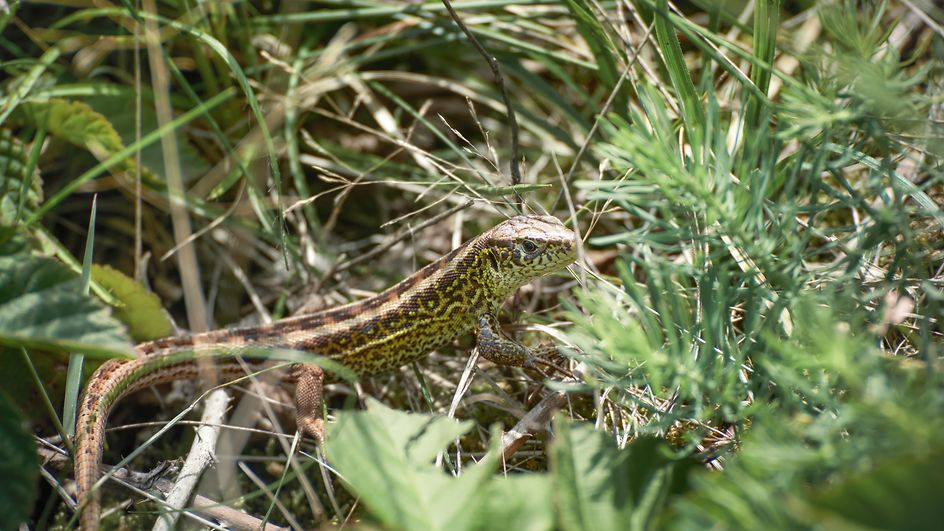
For example, DB Fahrzeuginstandhaltung cleared bushes and shrubs on an approximately 10,000-square-meter area in Tullnau, a district of Nuremberg, and created a sandy grassland – a particularly rare habitat for endangered plants and animals such as sand milk-vetch, the sand lizard and the smooth snake.

 Go
Go